
Baghdad, Iraq – Iraqi leaders have five days to choose a prime minister and end a bitter political crisis that continues more than five months after parliamentary elections were held.
A decision to declare a prime minister on Tuesday was once again postponed for further consultations within the Coordination Framework, the largest bloc of Shia parties, which commands 185 of 329 seats in parliament.
- list 1 of 3US halts shipment of Iraq’s oil dollars to curb Iran-linked groups: WSJ
- list 2 of 3Iraq’s ruling Shia bloc races to choose PM as US, Iran watch
- list 3 of 3Iraq parliament elects Kurdish politician Nizar Amedi as president
end of list
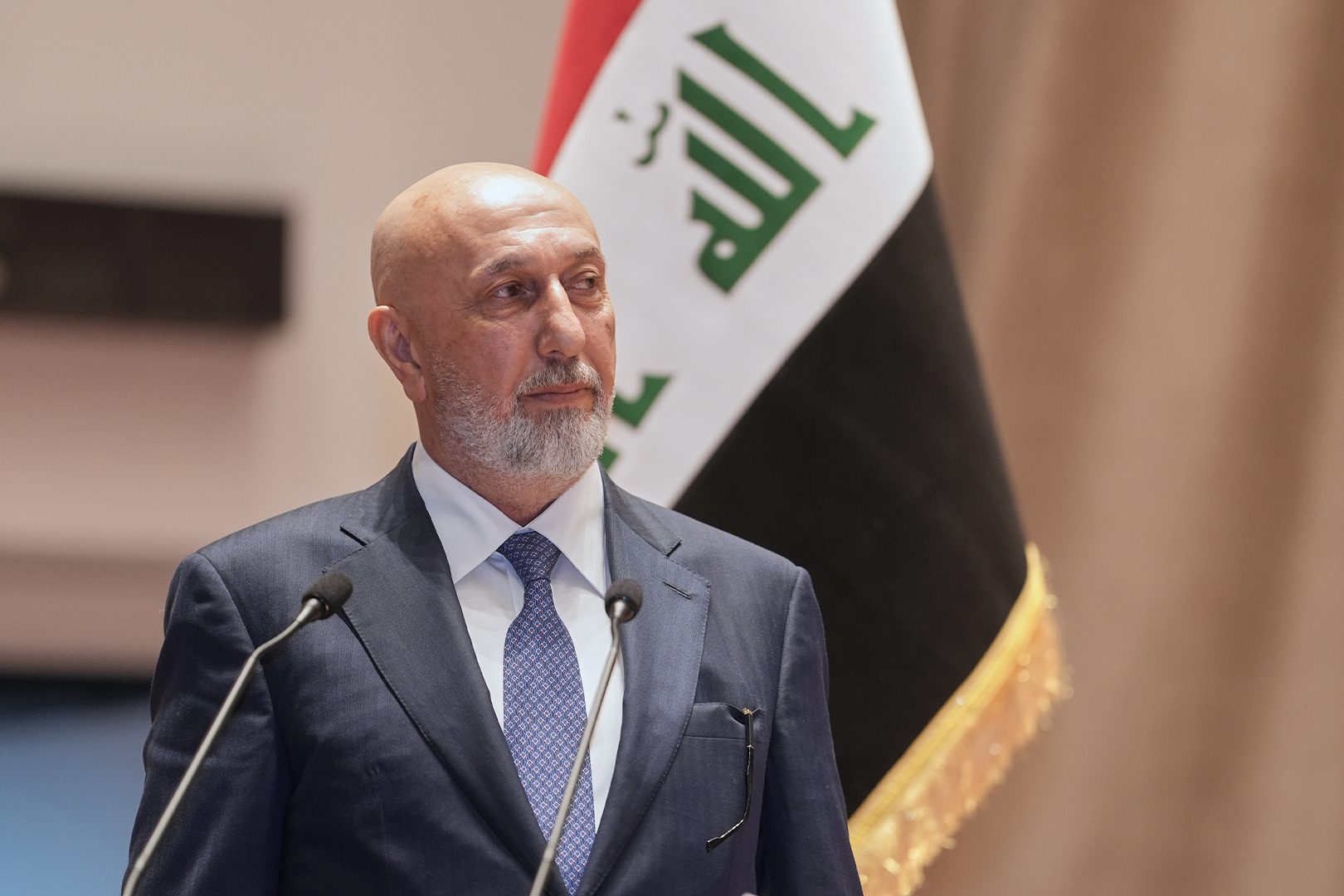
According to the Iraqi Constitution, the bloc must choose a prime minister by Sunday. Under Article 76 of the constitution, the president must ask the nominee of the largest parliamentary bloc to form a government within 15 days of being elected, and Nizar Amedi was elected president on April 11.
But the Coordination Framework has been beset by internal power struggles as Iraq balances relations with two powers competing for influence in the country: neighbouring Iran and the United States. The war between the two has further complicated those ties.
In January, the bloc chose two-time Prime Minister Nouri al-Maliki, who has close links with Iran, as its nominee. The move triggered an angry reaction from US President Donald Trump, who threatened to stop supporting Iraq if al-Maliki returned to the post.
Meanwhile, internal differences have emerged within the bloc, mainly between the Hikma Movement, led by Ammar al-Hakim, and the Asa’ib Ahl al-Haq Movement, led by Qais al-Khazali, further delaying the nomination of a candidate.
Balance ‘tipping’ in favour of al-Badry
In a meeting on Monday, the State of Law Coalition, a Shia bloc, nominated Bassem al-Badry as its prime minister candidate, while another group, the Reconstruction and Development Coalition, picked Ihsan al-Awadi.
Advertisement
Al-Badry currently serves as chairman of the Accountability and Justice Commission (formerly De-Baathification) while al-Awadi is the director of the office of caretaker Prime Minister Mohammed Shia al-Sudani.
“Our candidate, Bassem al-Badry, is considered the frontrunner due to the support he enjoys compared to Ihsan al-Awadi, the candidate of the Reconstruction and Development Coalition,” Hider al-Mola – a member of the State of Law Coalition, founded by al-Maliki – said in a statement to Al Jazeera.
Al-Mola said the delay in naming a prime minister was due to the repeated rescheduling of Coordination Framework meetings over differing viewpoints and objections among its leaders regarding the nominees. He hoped the disagreements would be resolved this week, saying the balance is “clearly tipping” in favour of al-Badry.
Under Iraq’s power-sharing system, in place since 2003 after a US-led coalition invaded the country, the presidency goes to the Kurds, the premiership to Shia Arabs and the post of parliament speaker to the Sunnis.
The recent visits by Ismail Qaani, head of the Quds Force, the foreign branch of Iran’s Islamic Revolutionary Guard Corps (IRGC), and US envoy to the Middle East Tom Barrack have added further complexity to Iraq’s political crisis.
Al-Mola denied any connection between their visits and the selection of the prime minister. He said Iran’s role is limited to supporting whatever the Iraqi political blocs agree on, calling it an internal matter and emphasising Tehran’s concerns for political stability in Iraq.
Political affairs researcher Saif al-Saadi said Qaani’s visit sought to ease regional tensions as Washington tried to block Iran-aligned leaders from forming the government.
Dispute over two-thirds quorum
Khaled Walid, member of the Reconstruction and Development Alliance, told Al Jazeera that at the Coordination Framework’s meeting on Monday, al-Badry’s supporters failed to secure the required quorum, which is two-thirds of the bloc’s members.
The disagreement now mainly revolves around the definition of the two-thirds, he said.
The State of Law Coalition argues the quorum should be calculated based on the number of Coordination Framework leaders, which stands at 12. But the Reconstruction and Development team argues it should be based on the number of the bloc’s parliamentarians.
Walid said al-Badry could not reach either benchmark. He added that his official nomination could be futile because his supporters within the Coordination Framework do not exceed 60 MPs, and he would subsequently fail to secure the confidence of parliament.
Advertisement
He further said meetings between al-Sudani, leader of the Reconstruction and Development Alliance, and al-Maliki have failed to reach a consensus as both sides cling to their positions.
He said the influence of “external factors” in forming the government has largely been diminished due to the war between the US and Iran, adding that some pressure remains, including regarding the US shipment of US dollars to Iraq.
On Wednesday, The Wall Street Journal, quoting Iraqi and US officials, said the US halted the shipments and paused some security cooperation programmes with the Iraqi military, increasing pressure on Baghdad to curb Iran-aligned groups.
Walid said some smaller political groups in Iraq have started hinting at the possibility of turning to a “compromise candidate” from a “second-tier list” that was previously discussed at the start of the talks over government formation.
Among the names being discussed in this list are Ali al-Shukry, head of the advisory body in the presidency; Qasim al-Araji, the national security adviser; Hamid al-Shatri, the country’s intelligence chief; Abdul-Hussein Abtan, former youth and sports minister; and Interior Minister Abdul-Amir al-Shammari.
Walid said the political crisis does not solely revolve around appointing a prime minister but extends to the overall management of the state and its foreign relations at a time of high tensions in the Middle East.
The selection of the Iraqi prime minister has turned into a test of the ability of the country’s political forces to reach a settlement that aligns internal consensus with regional demands. As internal divisions continue, a resolution remains contingent on mutual concessions that may lead to a consensus candidate or keep the situation open to further delays and ambiguity in the coming days.
Related News
After three years of war, what is the situation like in Sudan?
Iran war: What is happening on day 51 of the US-Iran conflict?

Iran war live: Tehran may skip talks as tensions rise over US ship seizure