Carney visits Europe: Can Canada seek refuge with the EU amid US trade war?
 15 September 2026
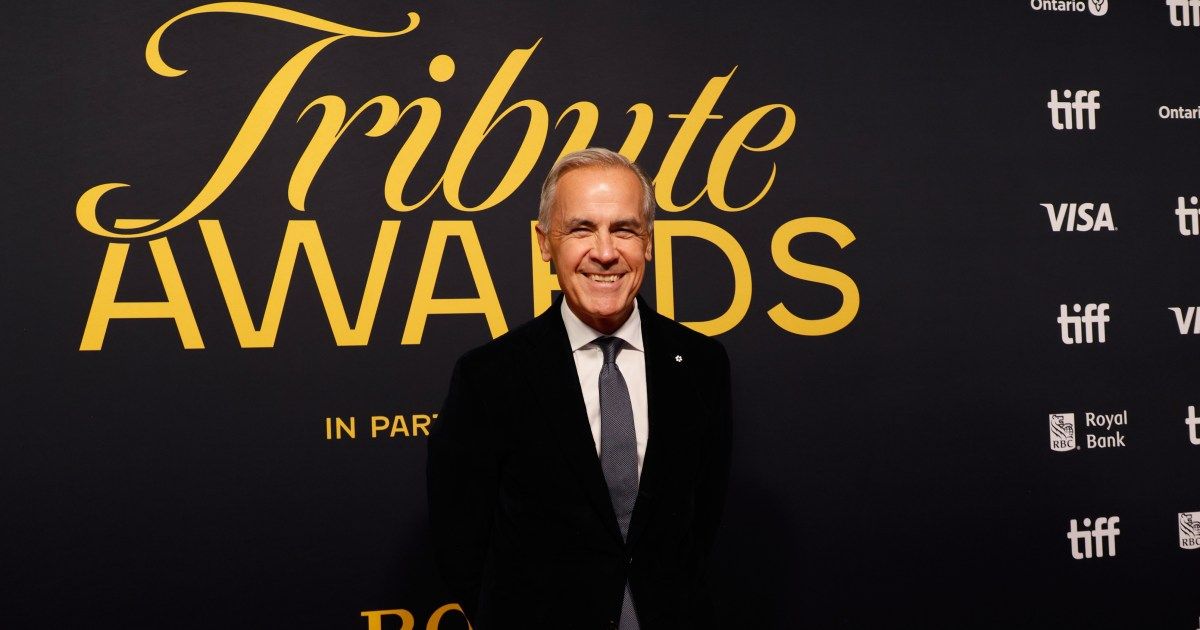

Canadian Prime Minister Mark Carney is visiting Europe this week as his country seeks a closer strategic alliance with the European Union amid its bitter trade war with the United States.
At the same time, once-reliable transatlantic relations between Europe and Washington have been strained by US President Donald Trump’s threats of tariffs and his aggressive bid to acquire Greenland, as well as the fallout from the US-Israel war on Iran, which European countries have refused to join.
- list 1 of 4Mark Carney pitches Canada to global investors amid US trade war
- list 2 of 4Apple changes name of Lake Ontario to ‘Lake America’ in maps app
- list 3 of 4How Canadians are bracing for the impact of Trump’s trade war
- list 4 of 4Why has the Netherlands moved $10bn of its gold from the US?
end of list
Carney is set to visit Strasbourg in France, and Liverpool in the United Kingdom between September 15 and September 17, according to an official statement.
Here’s what we know about his European ambitions:

Carney has said Canada is seeking opportunities to diversify trade and investments, but has not revealed much else officially.
In meetings with members of the European Parliament, the prime minister will seek to “strengthen Canada’s ties with the EU in trade, investment, and security”, a government statement announcing his visit read.
While some in Carney’s cabinet and in the EU have floated the idea that Canada might be seeking an “associate EU membership”, the prime minister has said that is not an option.
Advertisement
“We’re not looking to become a member of the European Union,” Carney said, speaking to reporters at the Toronto International Film Festival on Sunday. Rather, Canada is looking to start discussions on what he called a “unique alliance”.
“We share the same values, we have the same priorities, and we have very complementary strengths,” Carney continued.
A senior Canadian official, however, told The Associated Press news agency that the aim of the visit is to strengthen Canada’s sovereignty; thus, the country would not be willing to give up “our rights to Brussels”.
Canada will, however, push for an arrangement that would allow Canadians to live and work in Europe without visas, and that investment would be at the core of the deeper partnership, the official added.
Canadian opposition leader Pierre Poilievre in an X statement on Sunday said the prime minister was “out of touch”.
What would closer ties mean for Canada?
Carney has emphasised Canada’s over-reliance on the US as a trading partner and the need to diversify amid the increasingly fraught trade war with the Trump administration, which has seen both sides impose tit-for-tat trade tariffs. Last month, Trump even renamed Lake Ontario – which lies along the US-Canada border – “Lake America”, in a fit of pique.
Closer ties with the EU could achieve this by generating significantly more trade with Brussels instead of the US, which currently imports more than 70 percent of all Canadian goods, worth more than $300bn a year.
Canada’s trade with the EU is currently a distant second to the US and was worth 130 billion euros ($150bn) in 2025. Canadian passport holders can enter the Schengen zone as tourists for only 90 days but will require a permit for longer stays.
It could also mean more travel, work and retirement opportunities for Canadian citizens, analysts say.
Similar arrangements between the EU and non-EU member countries within Europe exist. Switzerland, for example, is associated with the EU through several bilateral treaties that mean it has access to the EU single market and the Schengen open border area.
Experts say Canada and the EU are both looking for ways to strategically shield themselves from fallouts with the US.
A deeper alliance appears part of a global trend of new powers and orders, analysts say, as Washington’s traditional allies find it much harder to rely on Trump.
A 2017 EU-Canada trade agreement already eliminated duties on Canadian products entering the EU and vice versa. It also made investments easier for firms on both sides to invest.
Advertisement
Both sides also already hold yearly Canada-EU summits. At last year’s meeting, they signed a defence pact stipulating joint responses to international security emergencies or stabilisation missions and interoperability between Canadian and European armed forces.
What has caused Canada-US and EU-US relations to sour?
Canada’s issues with the US began before Carney took office, when Trump unleashed his trade war on several countries, including Canada, at the start of his second term.
When imposing new trading tariffs on other countries, Trump has repeatedly cited the trade deficit that the US has with most of them.
According to the Office of the US Trade Representative, goods trade with Canada totalled $715.5bn in 2025. Exports to Canada were $333.6bn, compared with imports from Canada of $381.9bn. The US goods trade deficit with Canada was $48.3bn, a 21 percent decrease ($12.9 billion) over 2024.
Trump also accused Canada, however, of not doing enough to stem the flow of fentanyl, a highly addictive synthetic opiate drug, into the US.
Under former Prime Minister Justin Trudeau, Canada enforced retaliatory duties in response.
More recently, a new wave of US tariffs erupted after trade talks between the US and Canada collapsed in August. Trump has since slapped 50 percent tariffs on $20bn-worth of Canadian goods imported into the US.
When Canada retaliated with matching tariff rates, the US president moved to ban imports of certain products like whey, some alcoholic beverages, motorcycles and mopeds. He has also directed government agencies to declare Canadian products ineligible for long-term US government contracts.
Although Carney has warned that the US’s trade war could hollow out the economy, the Canadian public has largely rallied behind him and supports retaliatory measures.
Trump has separately irked the Canadian public by repeatedly floating the idea of making Canada a 51st state. He has also launched personal attacks on Canadian leaders and last month signed an executive order to change Lake Ontario’s name to Lake America.
Why are Europe-US relations fraught?
The US-EU relationship is similarly fraught, although Brussels exports mostly to the US. Trump has slapped a 15 percent tariff hike on the bloc since 2025.
Trump, who has repeatedly questioned the utility of the NATO security pact, was angry about EU member countries’ refusal to join the ongoing US-Israel war on Iran. Last year, tensions also arose over Trump’s insistence on seizing control of Greenland, the self-governing Arctic territory which is part of Denmark.
In January this year, seven European leaders, including French President Emmanuel Macron, German Chancellor Friedrich Merz and then-UK Prime Minister Keir Starmer, issued a joint statement saying the mineral-rich Arctic island “belongs to its people”, which also irked Trump enough to threaten yet more tariffs against European countries standing in his way. Later that month, he walked back these threats, saying he had agreed to a framework for a future deal over the island state with NATO chief Mark Rutte.
Advertisement
Earlier this month, the EU said it had signed a declaration with Greenland, promising a stronger partnership and announcing a 200 million-euro ($232m) investment package to soothe anxiety caused by Trump’s repeated threats to annex it.
Related News
Russia, China leaders to meet at Shanghai Cooperation Organisation summit

Iran war live: US vows toughest Iran sanctions, urges China support

Seven people, mostly foreign tourists, killed in helicopter crash in Kenya