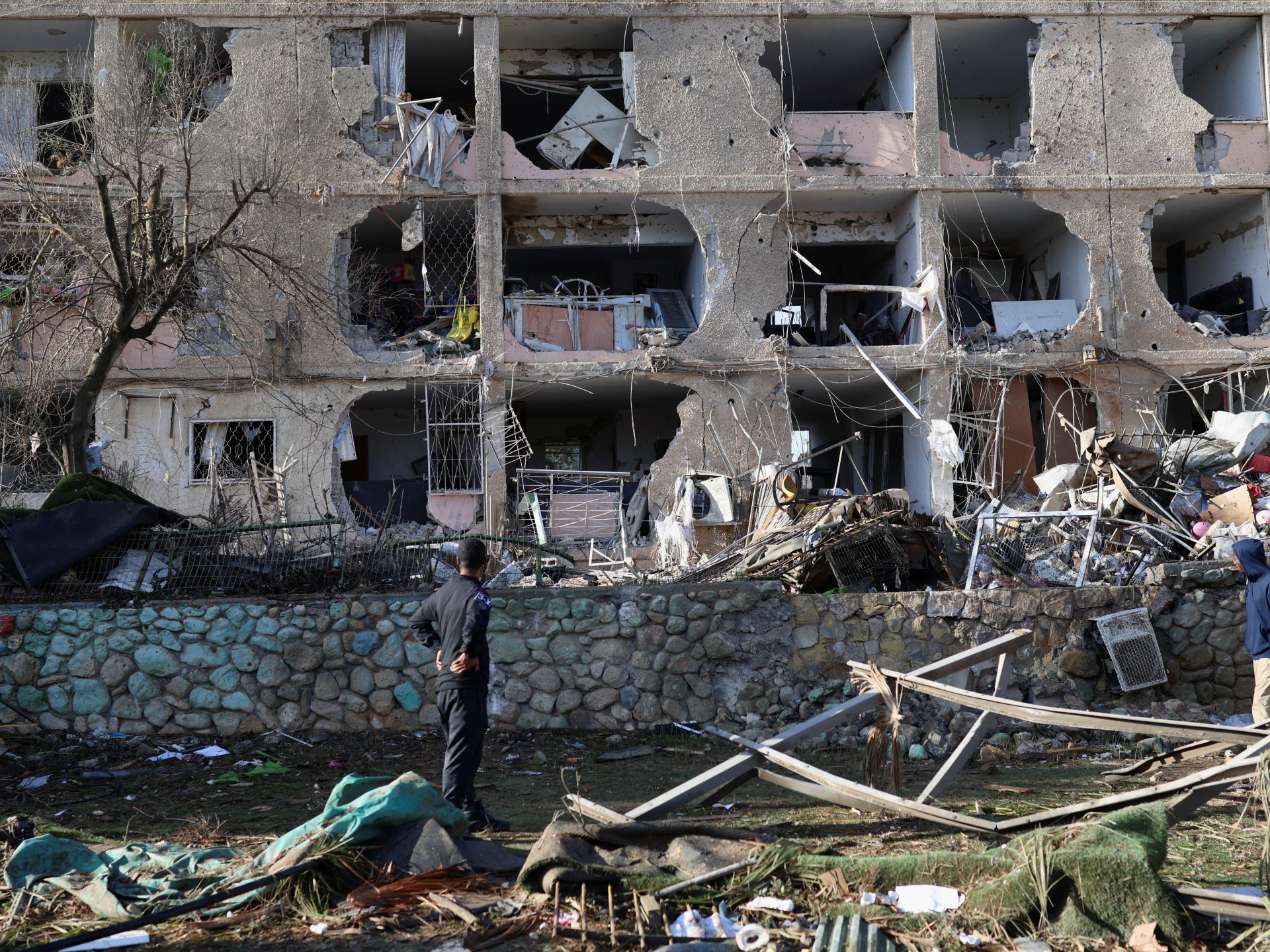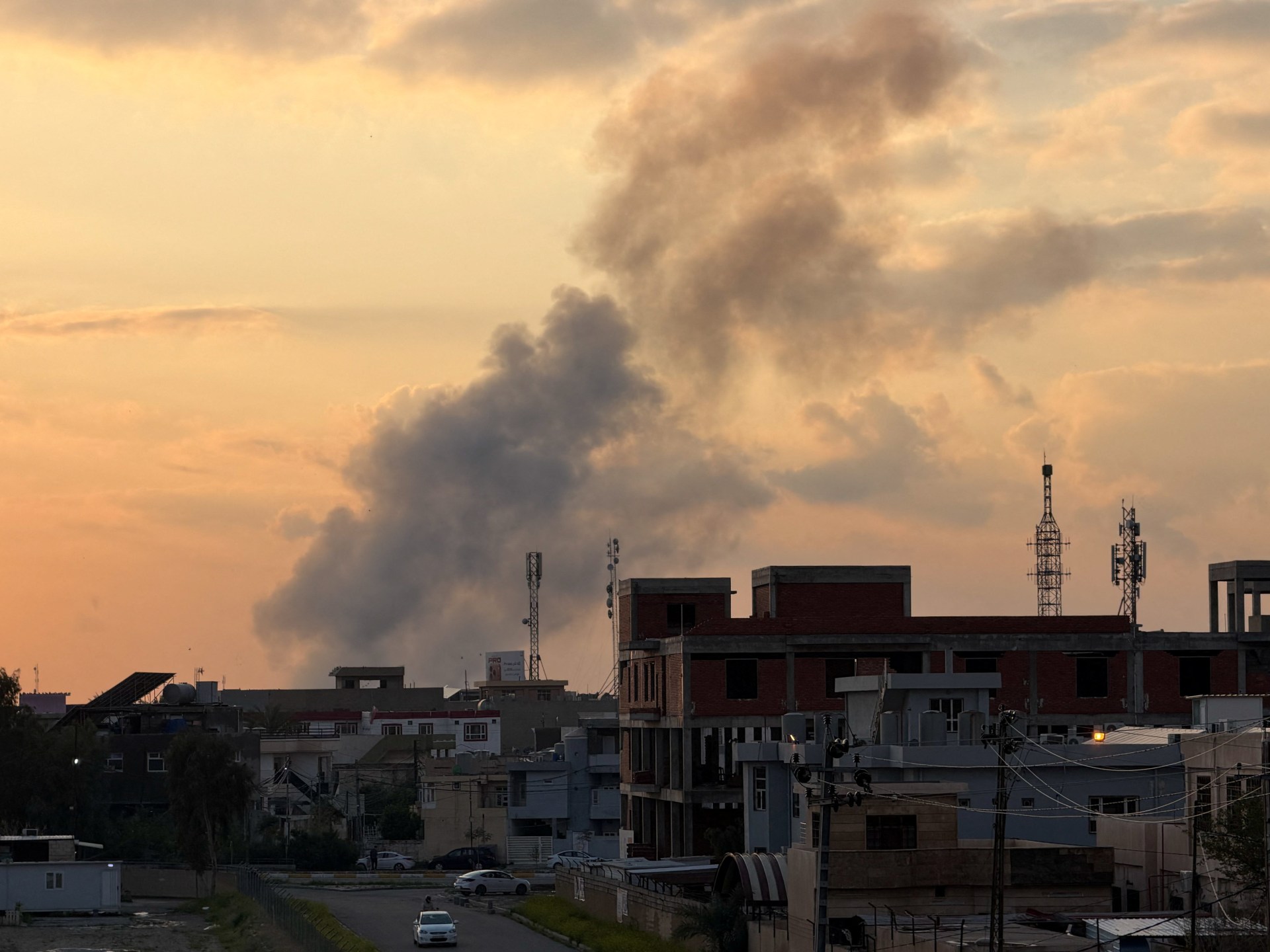

Air strikes targeting Iraq’s Popular Mobilisation Forces (PMF) have killed three fighters and two Iraqi police, as the US-Israeli war on Iran continued to spill over Iraq’s eastern border.
An Iraqi security source told Al Jazeera that Saturday’s double-bombing of the PMF’s headquarters near northern Iraq’s Kirkuk Airport also wounded two other fighters and six Iraqi soldiers.
- list 1 of 3The Take: Why Iraq is the most fragile front in the US-Israel war on Iran
- list 2 of 3Why Iraq is the most fragile front in the US-Israel war on Iran
- list 3 of 3Iraq to summon US envoy after air strikes kill seven fighters in Anbar
end of list
A statement from the ex-paramilitary coalition, which is now integrated into the regular Iraqi army, blamed the United States and Israel, saying that those killed had been “subjected to a treacherous Zionist-American” attack.
Separately, the Reuters news agency quoted security sources as saying that two members of the Iraqi police were killed in an air strike targeting the PMF in Mosul, about 105 miles (170km) northwest of Kirkuk.
Reporting from Baghdad, Al Jazeera’s Nicolas Haque said that Iraq was turning into an “expanding battleground” in the crisis, which began on February 28 with US-Israeli strikes on Iran and now threatens to engulf the region in a protracted conflict.
Since the war broke out, pro-Iran armed groups within the PMF, which was formed on the orders of Najaf-based Grand Ayatollah Ali Sistani in 2014 to fight ISIL (ISIS), have claimed responsibility for attacks on US interests in Iraq and beyond and have themselves been targeted.
Haque said the PMF takes its orders from Baghdad, but some factions are loyal to Tehran.
“That makes it very difficult for Baghdad to hold all of this together. Up until the war, the government successfully brought everybody around the table [and] was able to manage the different factions,” he said.
Advertisement
But as the war expands into Iraq, Baghdad has found itself “on a tightrope” between the US and Iran, said Haque.
“They can’t afford to turn their back on their biggest neighbour, Iran. Nor can they afford to turn their back on the United States,” he said, noting the economic and security ties between Baghdad and both countries.
Saturday also saw two drones targeting an airbase serving as a hub for US and coalition forces near Erbil airport in Iraq’s semi-autonomous Kurdish region. Haque said the US C-RAM air defence system was activated and intercepted the drones.
In parallel, Kurdish news outlet Rudaw reported a drone attack on the house of Nechirvan Barzani, president of the Kurdish region, in the western town of Duhok.
French President Emmanuel Macron said on X that he had spoken to Barzani, calling increased attacks in Iraq a “worrying development”.
In other developments, the Iraqi Ministry of Defence said on Saturday that a drone had crashed into the southern Majnoon oilfield “without detonating, causing no damage or injuries”.
Related News
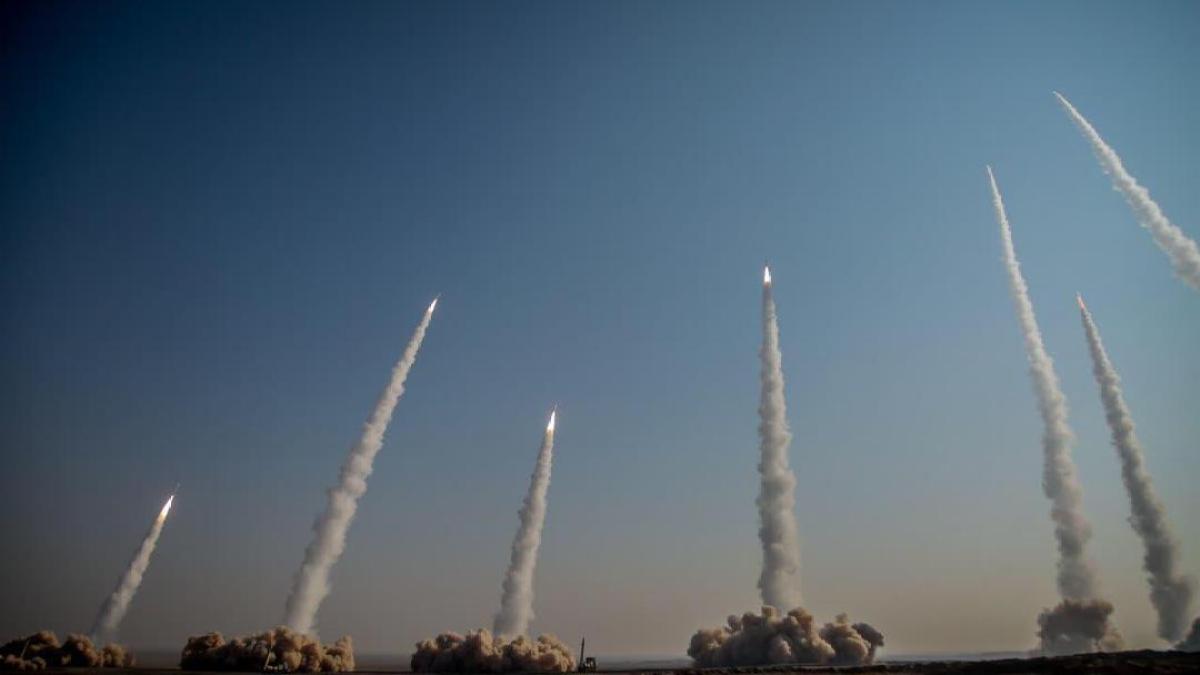
US says it has destroyed Iran missile capacity: How is Iran still shooting?
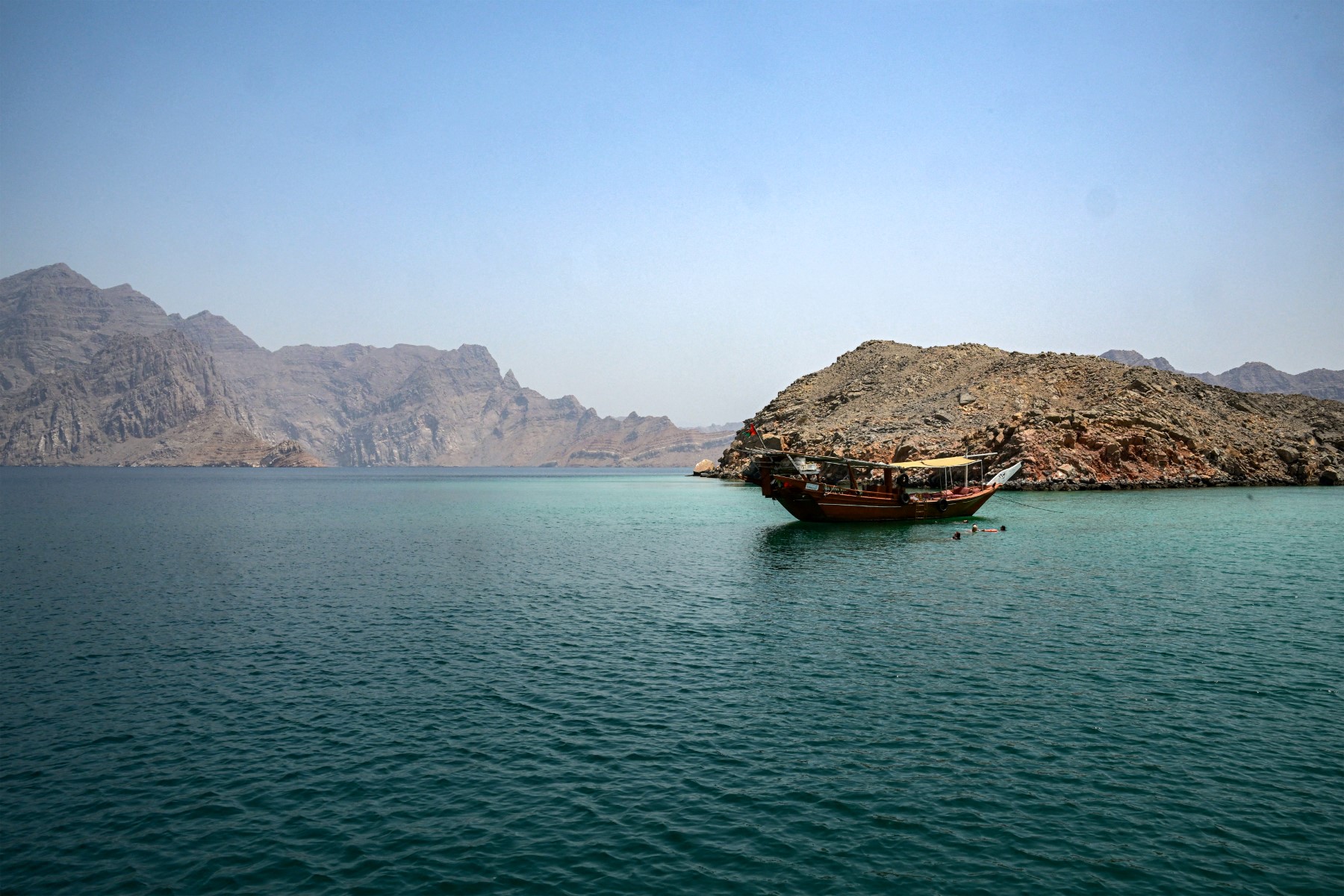
Iran says it will allow Japanese ships to transit the Strait of Hormuz

One Battle After Another’s big night: Key takeaways from the 2026 Oscars