
Ahmed Aboul Gheit, the secretary-general of the Arab League, has praised a peace plan presented by Sudanese Prime Minister Kamil Idris to the United Nations Security Council earlier this week.
Gheit said on Wednesday that the 22-member league backed the recently unveiled initiative, which calls for a ceasefire and global monitoring of the conflict, commending its “highly important political, humanitarian, and security messages” and calling for “positive engagement” with the plan.
- list 1 of 3Sudan’s PM presents peace plan to UNSC as fighting rages
- list 2 of 3People sheltering at Sudan displacement camp say they ’pray for peace’
- list 3 of 3Displacement camp running out of supplies for people fleeing Sudan’s war
end of list
Idris, who heads Sudan’s transitional civilian government, had stressed to the UNSC on Monday that the government’s proposal was “homemade”, rather than “imposed on us” – an indirect reference to truce plans supported by the so-called Quad comprising the United States, Saudi Arabia, Egypt and the United Arab Emirates.
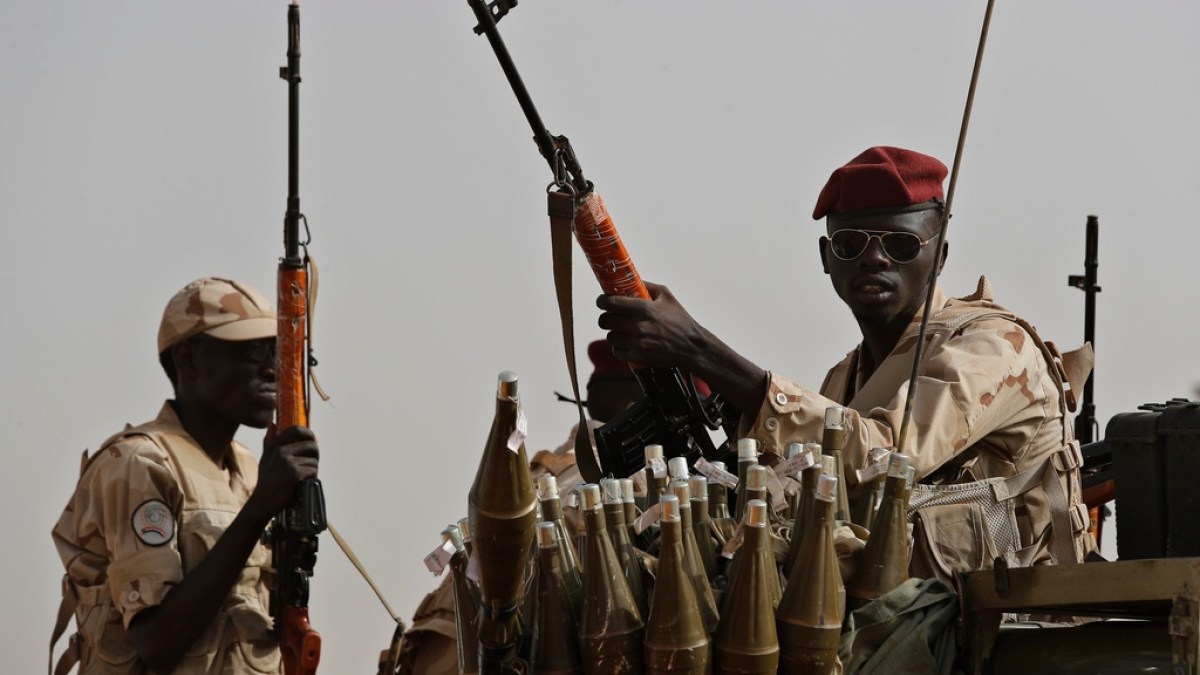
He called for the withdrawal of the paramilitary Rapid Support Forces (RSF), which has been locked in conflict with the military since April 2023, telling the UNSC’s 15 members that a truce would have “no chance of success” unless the group was confined to camps and disarmed.
Al-Basha Tibiq, adviser to the commander of the RSF, which agreed to the Quad’s proposal for a humanitarian truce back in November, rejected Idris’s plan, saying that the notion of the group withdrawing was “closer to fantasy than to politics”.
In an RSF statement posted on Facebook, Tibiq was quoted as saying that the plan was “nothing more than a recycling of outdated exclusionary rhetoric” that was indistinguishable from the position taken by Sudan’s military chief General Abdel-Fattah al-Burhan.
Advertisement
Al-Burhan had previously rejected the Quad’s proposal for a humanitarian truce, claiming that UAE involvement in the group meant the plan was biased and favoured the paramilitaries at the expense of the army.
The UAE has long rejected accusations that it is arming and funding the RSF. In March, it slammed a Sudanese move to file a case against it at the International Court of Justice, calling the charges a “cynical publicity stunt”.
Tens of thousands of people have been killed, and some 14 million displaced, by the war, which erupted over a power struggle between army chief al-Burhan and RSF commander Mohamed Hamdan “Hemedti” Dagalo.
In October, the RSF captured the city of el-Fasher in the western Darfur region after an 18-month siege that cut residents off from food, medicine and other critical supplies.
The paramilitary group has been accused of committing mass killings, kidnappings and widespread acts of sexual violence in its takeover of the city.
Idris presented his plan as fighting escalated further, with the RSF claiming it had regained control of the town of Alouba, a strategic town in the Kordofan region, where thousands are currently fleeing violence.
Sudanese officials said on Wednesday that 1,700 people had fled to Sudan’s White Nile state, east of the Kordofan region, many heading to the city of Kosti.
Reporting from Kosti, Al Jazeera’s Mohamed Vall said the city was already hosting about two million refugees and displaced people and was now “under amazing, huge stress” as it struggled to accommodate the new arrivals.
“There is a lack of … basic facilities for these people and the authorities are calling on the international community and any organisations, local or foreign, to come to help with this situation, particularly [given] huge cuts in funding for the United Nations organisations specialised in [providing] aid in Sudan,” said Vall.
In other developments, the Sudanese army said it had destroyed an RSF convoy in North Darfur state and announced that two people were injured in paramilitary shelling of two areas in Kadugli, South Kordofan.
Amid the escalation in fighting, US deputy ambassador to the UN, Jeffrey Bartos, who spoke to the UNSC before Idris on Monday, urged “both belligerents” to immediately accept the Quad’s proposal for a humanitarian truce.
UAE ambassador Mohamed Abushahab, a member of the Quad, said there was an immediate opportunity to implement the humanitarian truce and get aid to Sudanese civilians in desperate need.