As Hong Kong reckons with worst fire in decades, many see echoes of 2019
 05 December 2025

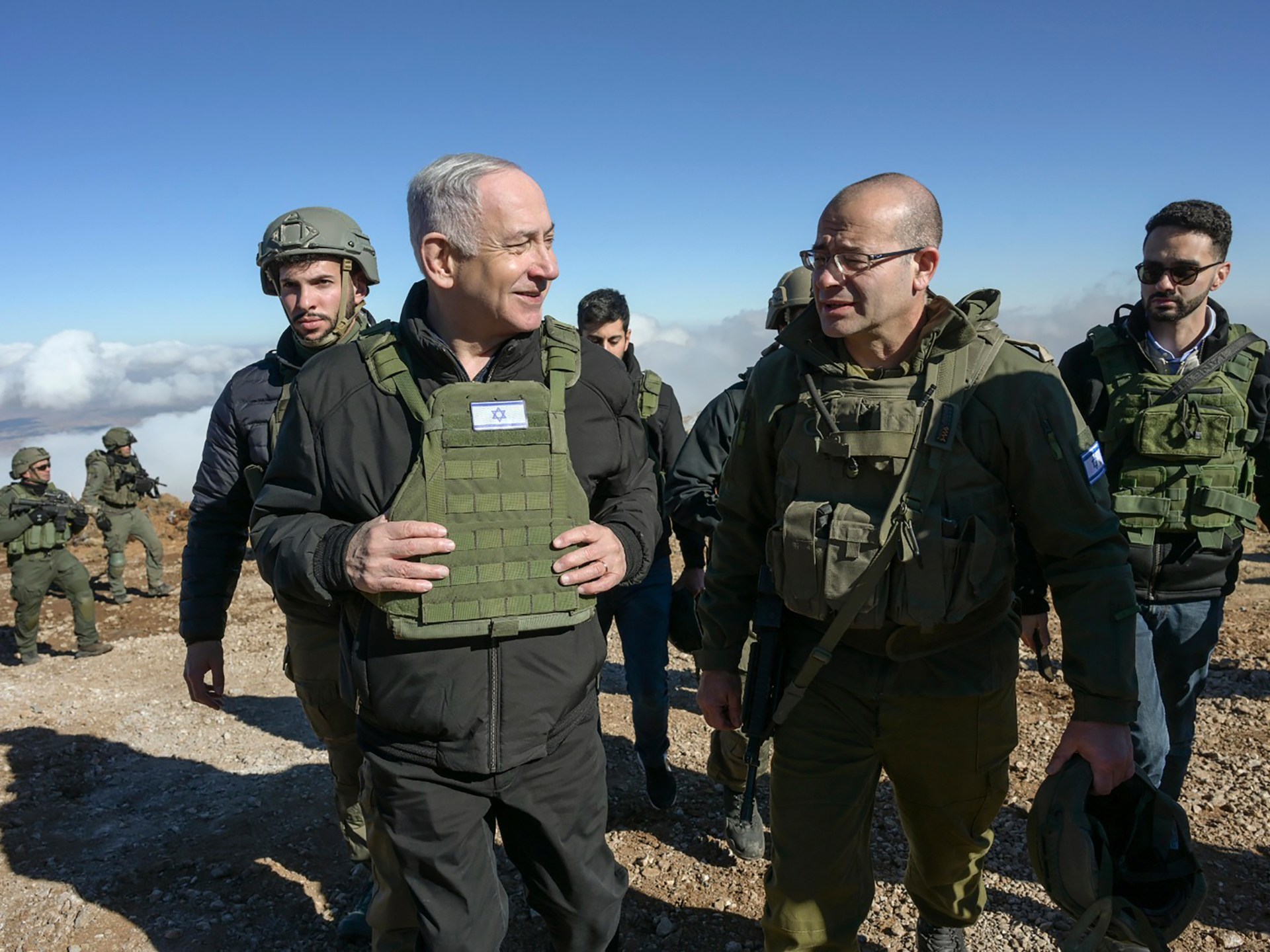
As Hong Kong grapples with the aftermath of a devastating housing estate fire that killed at least 159 people, the tragedy has revived some of the mistrust and divisions in the city that exploded in the form of 2019’s antigovernment protests.
The city watched in horror on November 26 as the fire broke out at Wang Fuk Court and then steadily spread to seven of the complex’s eight towers. Many residents were trapped inside, due to faulty alarms, according to official reports.
- list 1 of 4Japan, China continue to spar at UN over Takaichi remarks on Taiwan
- list 2 of 4Ukrainian diver Lyskun switches allegiance to Russia, loses all medals
- list 3 of 4Russia increasingly belligerent as truce talks flounder, Ukraine war rages
- list 4 of 4Israel “art-washing its war crimes” through Eurovision
end of list
The number of casualties has kept climbing since the fire was extinguished on November 28 – after burning for more than 40 hours – but Wang Fuk Court is on track to be one of the worst fires on record since a 1948 blaze killed 176 people.
The scale has been unthinkable for many Hong Kongers.
“This is not a village in the middle of nowhere; this is a downtown area. We wouldn’t have assumed such things would have happened,” Issie, an educator who works in Tai Po district, home to Wang Fuk Court, told Al Jazeera.
“This is something totally unthinkable. We would have expected the government to have … put out the fire.”
After the fire broke out, Hong Kongers quickly mobilised in ways not seen since the 2019 protests, when citizens, community groups, and religious groups distributed food, water, and shelter to young protesters – even if they did not always agree with them.
In Tai Po, community groups and individuals quickly brought clothing, food, and other supplies for the housing estate’s 4,000-plus residents, as others collated online databases of assistance.
Advertisement
Then came a petition calling for “four demands” of government accountability in the fire, a nod to the 2019 protest slogan of “five demands, not one less”. Local media reported that more than 10,000 people signed the petition before it was eventually taken down.
Walls of handwritten notes appeared, mourning the fire’s victims, in a striking visual similarity to the 2019 protest artworks known as “Lennon Walls”.

Mobilisation is in Hong Kong’s “DNA”, a Hong Kong professor familiar with the city’s governance structure told Al Jazeera, requesting anonymity because of fears of professional repercussions.
“People couldn’t understand why that happened … because it was supposed to be a large-scale renovation project. The renovation project took place to make residents safer, to make the building structure safer, and instead, it led to this tragedy,” he said.
Hong Konger Athena Tong, a visiting research fellow at the University of Tokyo, echoed a view held by many in the city – that the government was slow to respond.
“The fact that it was necessary for society, the everyday citizens, to mobilise at that scale to help with relief demonstrates that there is no trust that the government is competent,” Tong told Al Jazeera.
Online, Hong Kongers began to question the government’s early response, including an early suggestion from officials and experts that Wang Fuk Court’s bamboo scaffolding – a Hong Kong construction tradition – was responsible for the fire and should be replaced with metal.
Fire investigators later ruled that subpar mesh netting and Styrofoam blocks were the main culprits.
But some of the discontent comes from the way the 2019 protests – and the deep existential questions they raised about the future of Hong Kong – were never really resolved, according to observers.
The protests broke out in 2019 over plans to amend Hong Kong’s extradition agreement with China, but they erupted into a widespread antigovernment movement as a range of grievances began to surface – some dating back to the city’s 1997 return to Chinese sovereignty.
The pushback ranged from issues such as how Hong Kong’s local leader would be chosen to whether Beijing was backpedalling on promises that the former British colony would retain a “high degree of autonomy” until 2047 under the “one country, two systems” agreement with China. For others, the protests brought up questions about the future of Hong Kong’s unique identity and culture.

Pro-government Hong Kongers and Chinese officials, by contrast, saw the protests as a city descending into chaos, possibly encouraged by foreign powers like the US government, which wanted to destabilise Hong Kong for their own reasons.
Advertisement
The protests brought Hong Kong to a standstill for months but began to fizzle in 2020 as authorities enacted COVID-19 containment laws. In mid-2020, Beijing imposed national security legislation that made mass protests next to impossible.
Issie, the Hong Kong resident, said there were parallels between the government’s response in 2019 and 2025.
“If you look at the response they have to a lot of issues, especially when it comes to people being critical about their policies, and even this time when people were trying to help,” she told Al Jazeera, “These things wouldn’t have happened before.”
Earlier this week, a Hong Kong government spokesperson said “foreign forces and anti-China and destabilising forces” had been disseminating fake news online and through “seditious pamphlets” to “maliciously smear the rescue work, instigate social division and conflict to undermine the society’s unity” in language highly reminiscent of its 2019 remarks.
Their comments were echoed by Hong Kong’s Office for Safeguarding National Security of the Central People’s Government, which said a “small number of external hostile forces” were trying to exploit the tragedy and “replicate tactics from the anti-extradition bill unrest” in 2019 to disrupt rescue and recovery efforts, according to China’s state-run Global Times newspaper.
Hong Kong police have arrested at least 15 people as of Friday for suspected manslaughter in relation to the fire, and separately arrested at least three others on suspicion of sedition and “attempting to incite discord”, according to local media reports.
They include an unnamed community volunteer, former district councillor Kenneth Cheung, and university student Miles Kwan, who was arrested for leafleting, according to local media.

Ronny Tong, a member of the local government’s Executive Council, told Al Jazeera that little information has been released about the sedition-related arrests, and the national security charges against them would have relied on more evidence than criticism of the government.
“We – with a capital W – take the view that the law is the law. There is a possibility that if someone is infringing the law at a very sensitive time … then the police should act on the side of caution. If they overreacted, the courts will be there to safeguard,” Ronny Tong said.
He told Al Jazeera that he felt it made sense for the government to take over community assistance from volunteers to streamline their efforts. Over the past week, the government promised Wang Fuk Court residents would receive free housing until their homes were rebuilt, and offered a subsidy of 100,000 Hong Kong dollars ($12,847).
Hong Kong leader John Lee has also called for an independent committee to investigate the fire and review Hong Kong’s building works system, although only a limited number of details have been released.
Advertisement
As of Friday, no government official has resigned over the deadly fire.
“The government, at the moment, is looking into whether there have been any corruption practices involved [in the fire], and then there is a question of rebuilding,” Ronny Tong said. “The only real assistance that we could give to the victims is to give them back their homes. We can’t give them back their relatives, who unfortunately have passed away, but I think it is within the power of the community to rebuild the buildings.”
Related News
US officials to discuss Venezuela next steps after airspace closure
North Carolina officials say US Border Patrol has ended Charlotte operation
Trump yanks G20 invitation from South Africa over false genocide claims