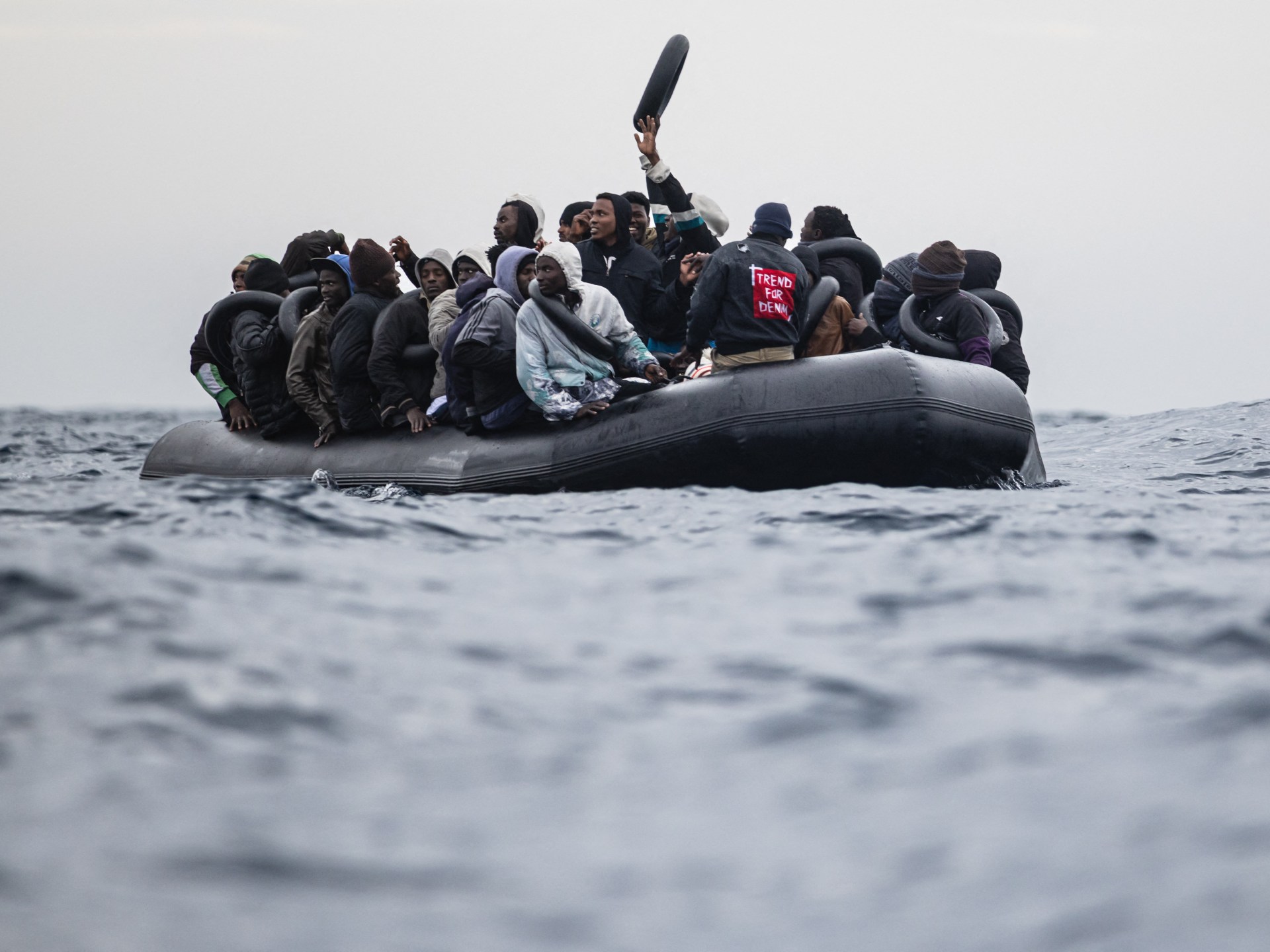

The new year is less than two months in, but already more than 560 people have gone missing in the Mediterranean Sea while trying to reach Europe, making it on course to be one of the deadliest years on record. At least 500 of those were lost crossing from Libya, Tunisia and Algeria to a Europe that continues to attempt to force them back.
The stories of those lost at sea, many of them travelling on boats that offer little protection from the waves, reveal the extent of their suffering.
- list 1 of 3Eight bodies recovered in Libya, Greece as Mediterranean death toll rises
- list 2 of 3Tested on Palestinians: Epstein, Israel’s Barak pushed spy tech in Nigeria
- list 3 of 3Fears of ‘slow, certain death’ stalk Tigray amid rumblings of renewed war
end of list
Earlier in February, 53 people, two of them babies, were reported to be dead or missing after their boat capsized off the coast of the Libyan town of Zuwara. Only two women, both Nigerian, were rescued.
A few weeks earlier, as a freak cyclone tore across the Mediterranean Sea, hundreds, possibly up to a thousand people, desperately trying to reach Europe, were believed to have lost their lives.
Qualified risk
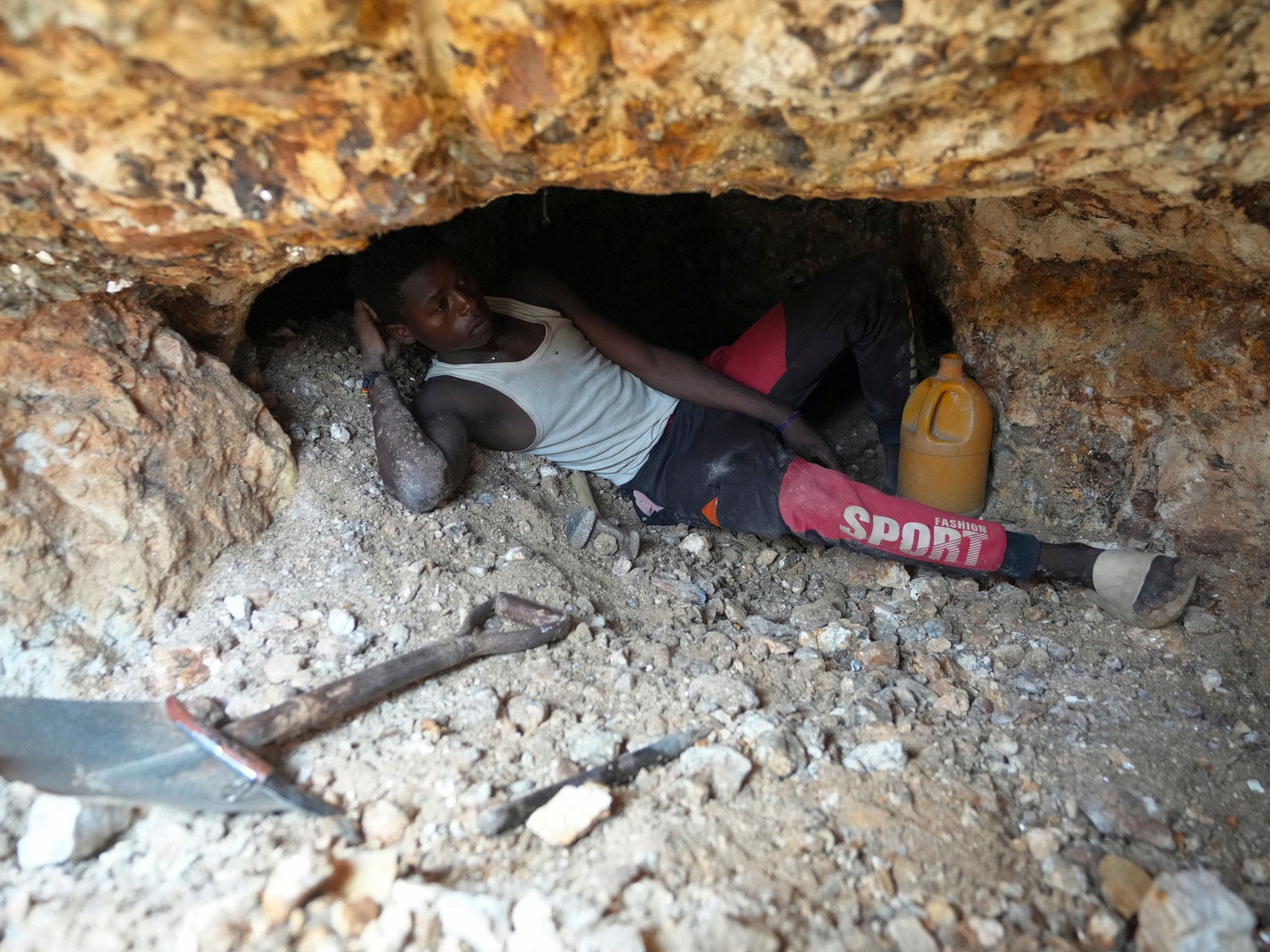
The risks of travelling to and through Libya are well known among migrants and refugees. Nevertheless, they come.
According to the United Nations’ International Organization for Migration (IOM), between August and October 2025, at least 928,000 migrants were identified in Libya, hoping to either stay in the North African country or, in the case of many, attempt to cross to Europe and the promise of a better life.
But, as they wait for the funds to pay for their passage, or the right opportunity to travel, they find themselves prey to the militias that have controlled much of Libya since a civil war robbed the country of a stable and unified government.
Advertisement
A report, issued by the UN Human Rights Office in February, painted a bleak picture of life for refugees and irregular migrants in Libya. In it, researchers described an environment where traffickers and armed groups could conduct widespread and systematic abuse against migrants with impunity. These “grave violations and abuses have evolved into deliberate, profit-driven practices that together form a ruthless and violent business model”.
Ola, a 25-year-old from Freetown in Sierra Leone, is one of the thousands to have fallen victim to Libya’s militias. Speaking from Libya’s capital Tripoli, Ola described being beaten and held prisoner by one of the militias in Zuwara, which is in western Libya.
Ola said that his hand had still not recovered after he was hit with an iron bar before he was detained in the summer of 2024. Ola remained in detention, enduring forced labour and regular beatings, for three months: the time it took his parents to borrow the $700 his captors demanded to free him.
“Conditions were very bad,” he said of his time in detention, as he rubbed his injured hand. “There was a lot of suffering. We would have bread to eat, and sometimes we had to drink the water they gave us to wash in. It was very bad; it had salt in it.”
“I did not have a [reputation for taking risks] in my country,” Ola said.
“I did not associate with bad people. I never did anything illegal,” he continued. “I know this is dangerous, but it’s better than where I come from”.
Mubarak, a 31-year-old from Sudan, is no different. He fled fighting around his village near Nyala in Darfur in 2023, crossing into Libya overland through Chad. Like Ola, Mubarak described being held prisoner, being beaten and forced to work by one of Libya’s militias, before being released.
Mubarak also knows the risks of continuing to Europe and is ready to accept them. He laughed bitterly, “I know the crossing [to Europe] is dangerous. [But] It’s just the money that’s stopping me. I know in my soul that Libya is just as dangerous as Sudan, but where will I go?”
No deterrence for the desperate
For those willing to stake their lives on surviving what the IOM says is the world’s most dangerous migration route, European deterrence means little.
Nevertheless, the European states most exposed to departures from Tunisia and Libya, principally Italy, have adopted increasingly punitive measures. Under a new Italian bill approved earlier this month, the country can indefinitely prohibit boats from entering its waters “in cases of grave threats to public order or national security”.
Advertisement
Moreover, the bill allows Italy to stop boats and send passengers to third-party countries it has outsourcing deals with, such as Albania, with no indication that authorities would check for protection needs, vulnerabilities, or physical or mental health concerns. The European Parliament has also signed off on changes to EU asylum rules that let member states transfer asylum seekers to “safe third countries”.
How effective all of that is at reducing migrant numbers remains to be seen. Despite an Italian government elected partly on the back of its anti-migrant platform in 2022, arrival numbers remain stubbornly high, with more than 63,000 people braving the odds in 2025, almost the identical number as those from the previous year.
“Why people take these extreme risks is one of the big questions,” said Ahlam Chemlali, a migration expert at Aalborg University in Denmark, who has conducted extensive field research among irregular migrants along Tunisia’s border with Libya,
Chemlali described speaking to the women in the border region, who knew and, in many cases, had experienced the danger inherent to migration firsthand.
“They told me they were already dead there [on the border], and they’re right. It’s a social death, where people have no future,” she said, “Everything is denied to them, so taking these risks is one way they can regain some control over their lives. They understand what they’re doing. The EU has poured millions into information campaigns, but the prospect of being stuck in limbo with no future feels worse. This is especially true for women with children. The presence of children can be a huge motivator, but of course, it also increases the risks.”
In Ola’s case, the drive to reach Europe is unwavering. He craves the rule of law – anything that would lead to consequences for those committing acts of violence against him.
“Life in Europe would be amazing,” he said, the tone of his voice lightening, “I would be safe. There is no violence there. If there is violence, it is punished by the law.
“I will educate myself and then get a job.”
Related News
Israel’s top court allows aid groups facing Gaza ban to continue working

Israel approves proposal to register West Bank lands as ‘state property’

Hungary to block 90 billion euro EU loan to Ukraine in Russian oil dispute