Iran must not be allowed charge tolls in Strait of Hormuz, UN watchdog says
 11 April 2026
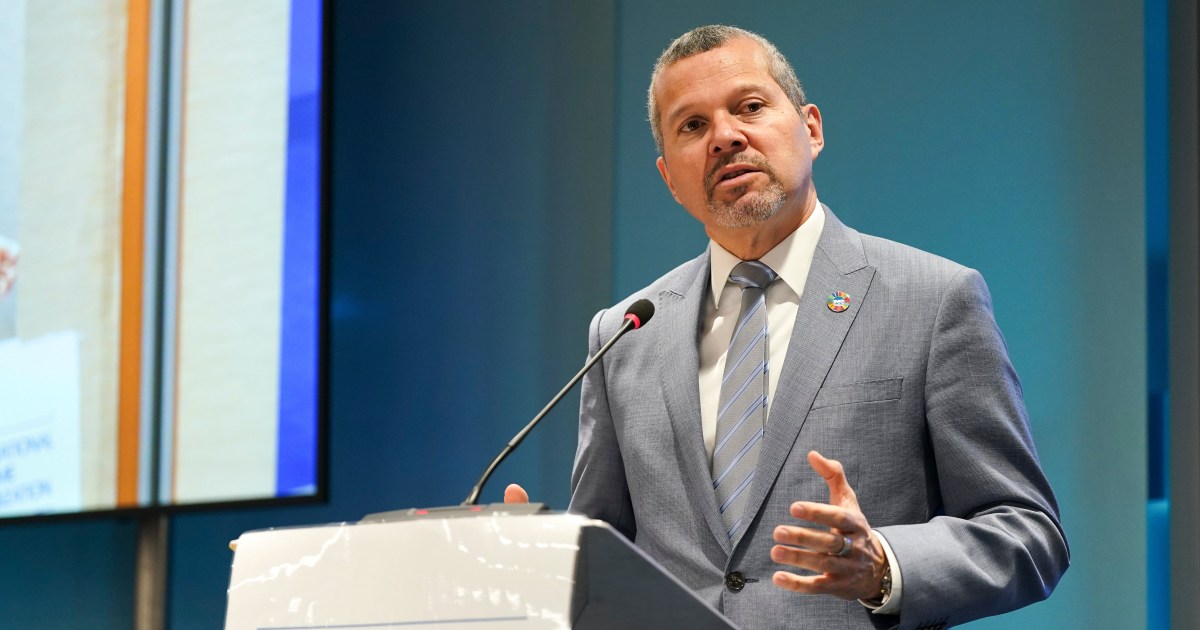

Iran’s bid to charge ships tolls in the Strait of Hormuz would be illegal and should be rejected by the international community, the head of the global shipping watchdog has said, as uncertainty hangs over the country’s fragile truce with the United States.
Iranian authorities have demanded the right to impose tolls on vessels transiting the strait after the end of the war.
- list 1 of 4“Diplomacy is not an event, it’s a process, it takes time.”
- list 2 of 4US President Trump says US ‘wins’ regardless of how Iran talks go
- list 3 of 4Fury beats Makhmudov in heavyweight boxing comeback, then calls out Joshua
- list 4 of 4Israel reprimands Spanish diplomat over detonation of Netanyahu effigy
end of list
US President Donald Trump has also floated the possibility of a “joint venture” for collecting payments operated by Washington and Tehran.
“Countries do not have the right to introduce tools or payments or charges on these straits,” Arsenio Dominguez, the secretary-general of the International Maritime Organisation, said in an interview with Al Jazeera.
“Any introduction of tolls is something that is against international law,” Dominguez said.
“And I will call for anyone not to actually follow and use these kind of services because that’s a precedent that it would be very detrimental for global shipping.”
Dominguez made his comments on Saturday amid marathon ceasefire talks between US and Iranian officials in Pakistan, which wrapped up on Sunday without an agreement.
US Vice President JD Vance said Tehran had not accepted Washington’s terms for a deal, including forgoing nuclear weapons, and his delegation had decided to depart Islamabad after presenting their “final and best offer” for the Iranian side to consider.
Iran’s state-run Press TV said the US side’s “excessive demands” had prevented a deal, with the strait and the country’s nuclear programme among the points of contention.
Advertisement
Despite the announcement of a two-week ceasefire between the US and Iran on Tuesday, shipping in the waterway effectively remains at a standstill, crippling oil and natural gas exports from the Gulf.
Only 22 ships with their automatic identification system turned on exited the strait between the start of the truce and Friday, according to S&P Global, compared to about 135 daily transits before the war.
The US military said on Saturday that it had sailed two warships through the strait in an effort to clear the waterway of Iranian mines.
The announcement came a day after Trump insisted the strait would reopen “fairly soon” with or without Tehran’s cooperation.

Dominguez said the fundamental solution to resolving the blockage of the strait is ending the war.
“We didn’t have any issues with ships transiting the Strait of Hormuz before this conflict started,” Dominguez said.
“In the moment that that comes to an end, we immediately expect that, step by step, we can resume transit in the region,” he said, adding that countries would need to take steps to ensure the waterway is free of hazards such as mines.
“It is for the benefit of all the countries in the region to actually resume the operations in the way that we were doing it before the conflict,” Dominguez added.
Dominguez also dismissed suggestions that there is any need for new agreements or frameworks to govern the strait.
The chief of the UN watchdog said the 1968 traffic separation agreement between Iran and Oman, which divides the waterway into north and south-bound shipping lines, had functioned as intended before the conflict.
“Once we de-escalate, we start building back the necessary steps for this to operate. We don’t need additional mechanisms after the conflict,” he said.
Dominguez also expressed concern for the wellbeing of some 20,000 seafarers stranded in the Gulf due to the effective blockade of the strait.
“That is my biggest concern, and the longer this goes, the more detrimental it is for them,” Dominguez said.
“We will see as well that this will have a negative impact in the global economy, but my focus is on the people, the innocent people in shipping, before I actually think of the global economy,” he said.
Related News
OPEC+ agrees to hike oil output, warns of slow recovery after attacks
How the US and Israel are waging war on Iran’s medicines, vaccines
‘Closer to a break than ever’: Can NATO survive if Trump pulls the US out?