
Israeli legislators have approved a bill to establish a special tribunal with the power to impose the death penalty on Palestinians accused of involvement in the Hamas-led attacks of October 7, 2023.
The bill passed 93-0 in Israel’s 120-seat parliament, the Knesset, late on Monday.
- list 1 of 4Lamine Yamal waves Palestine flag as Barcelona celebrate La Liga win
- list 2 of 4How impunity in Shireen Abu Akleh’s case fuels Israeli attacks on the press
- list 3 of 4‘Stupid’: Trump rejects Iran response to US peace proposal
- list 4 of 4Israeli attacks kill at least four in southern Lebanon
end of list
The remaining 27 legislators were absent or abstained from voting.
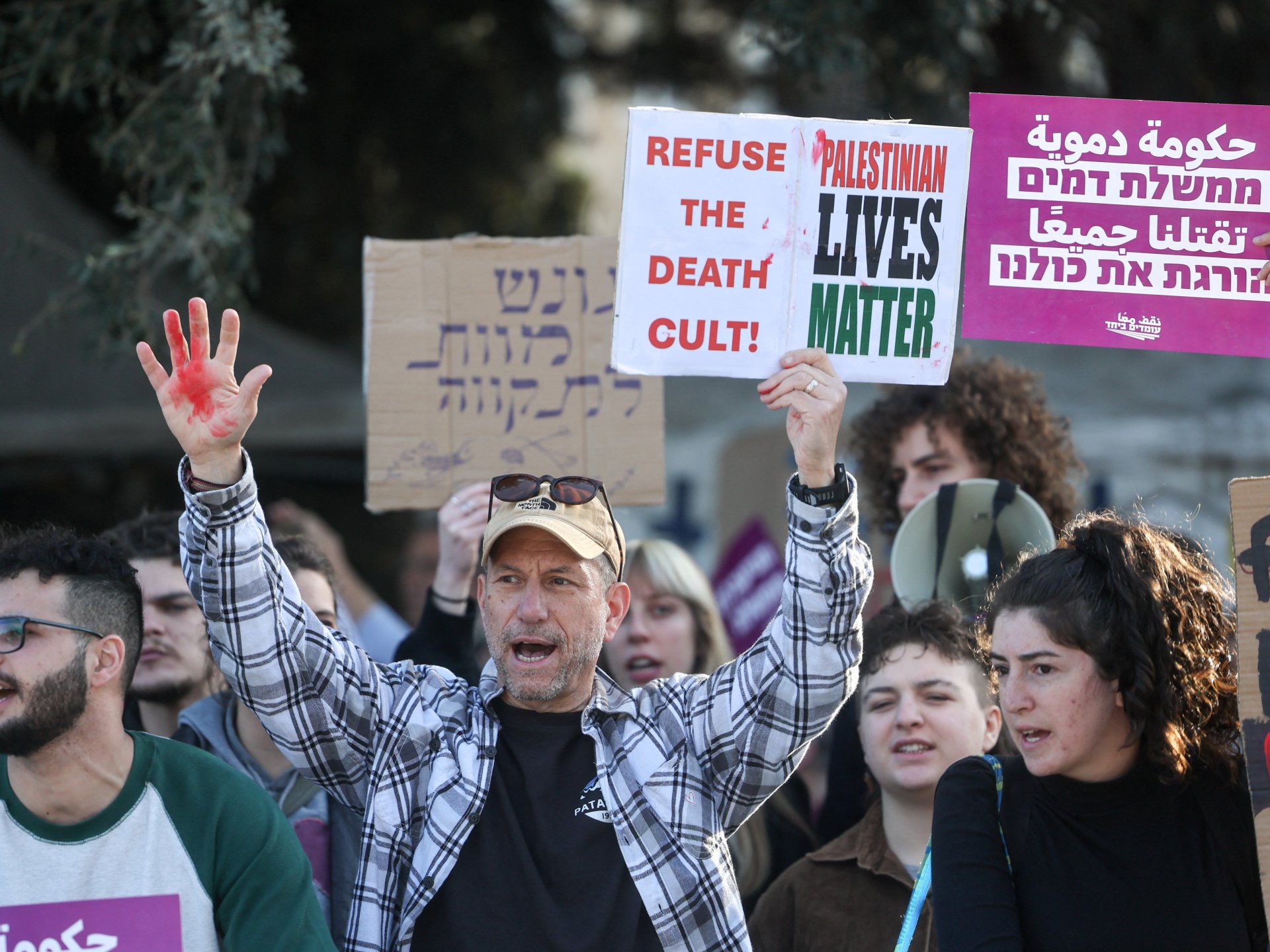
Israeli and Palestinian rights groups warn that the bill will make the death penalty too easy to impose while also doing away with procedures safeguarding the right to a fair trial.
Muna Haddad, a lawyer with Adalah – The Legal Center for Arab Minority Rights in Israel, told Al Jazeera that the bill intentionally lowers the legal protections to a fair trial to secure the mass conviction of Palestinians.
“The bill explicitly permits mass trials that deviate from standard rules of evidence, including broad judicial discretion to admit evidence obtained under coercive conditions that may amount to torture or ill-treatment,” Haddad said.
“This constitutes a severe violation of fair trial guarantees that falls well short of international law requirements.”
In a departure from standard Israeli judicial practice, which typically prohibits courtroom cameras, the bill mandates the filming and public broadcasting of key moments in the trials on a dedicated website.
This includes opening hearings, verdicts and sentencing.
Haddad warned that this provision effectively “transforms proceedings into show trials at the expense of the accused’s rights”.
Advertisement
“The provisions governing public hearings… violate the presumption of innocence, the right to a fair trial, and the right to dignity,” Haddad explained. “The framework effectively treats indictment as a finding of guilt, before any judicial examination has begun.”
Israel has been holding an estimated 200-300 Palestinians, including those captured in the country during the October 7 attacks, who have not yet been charged.
The Hamas-led assault on Israeli communities along Israel’s southern fence with Gaza killed at least 1,139 people, mostly civilians, according to an Al Jazeera tally based on official Israeli statistics. About 240 others were seized as captives.
Israel’s subsequent genocidal war on Gaza has killed at least 72,628 Palestinians, including at least 846 since a United States-brokered “ceasefire” came into effect last October.
The war, which United Nations experts say could amount to genocide, has left the Palestinian territory in ruins.
Several Israeli rights groups – including Hamoked, Adalah and the Public Committee Against Torture in Israel – said on Monday that while “justice for the victims of October 7 is a legitimate and urgent imperative”, any accountability for the crimes “must be pursued through a process which includes rather than abandons the principles of justice”.
The bill is separate from a law passed in March that approved the death penalty for Palestinians convicted of murdering Israelis, a measure harshly condemned by the international community and rights groups as discriminatory and inhumane.
That law applies to future cases and is not retroactive, so it could not apply to the October 2023 suspects.
Hamas spokesperson Hazem Qassem said the new law “serves as a cover for the war crimes committed by Israel in Gaza”.
The International Criminal Court is probing Israel’s conduct of the Gaza war and has issued arrest warrants for Prime Minister Benjamin Netanyahu and former Minister of Defence Yoav Gallant, as well as three Hamas leaders who have all since been killed by Israel.
Israel is also fighting a genocide case at the International Court of Justice.
It rejects the allegations.
Related News
Can the EU’s Article 42.7 offer Europe NATO-like collective defence?

Syria and Lebanon make ‘significant progress’ at talks on joint interests
South Africa’s top court revives impeachment inquiry against president