NASA’s Voyager 1 hits record one light-day distance, 50 years after launch
 18 November 2026
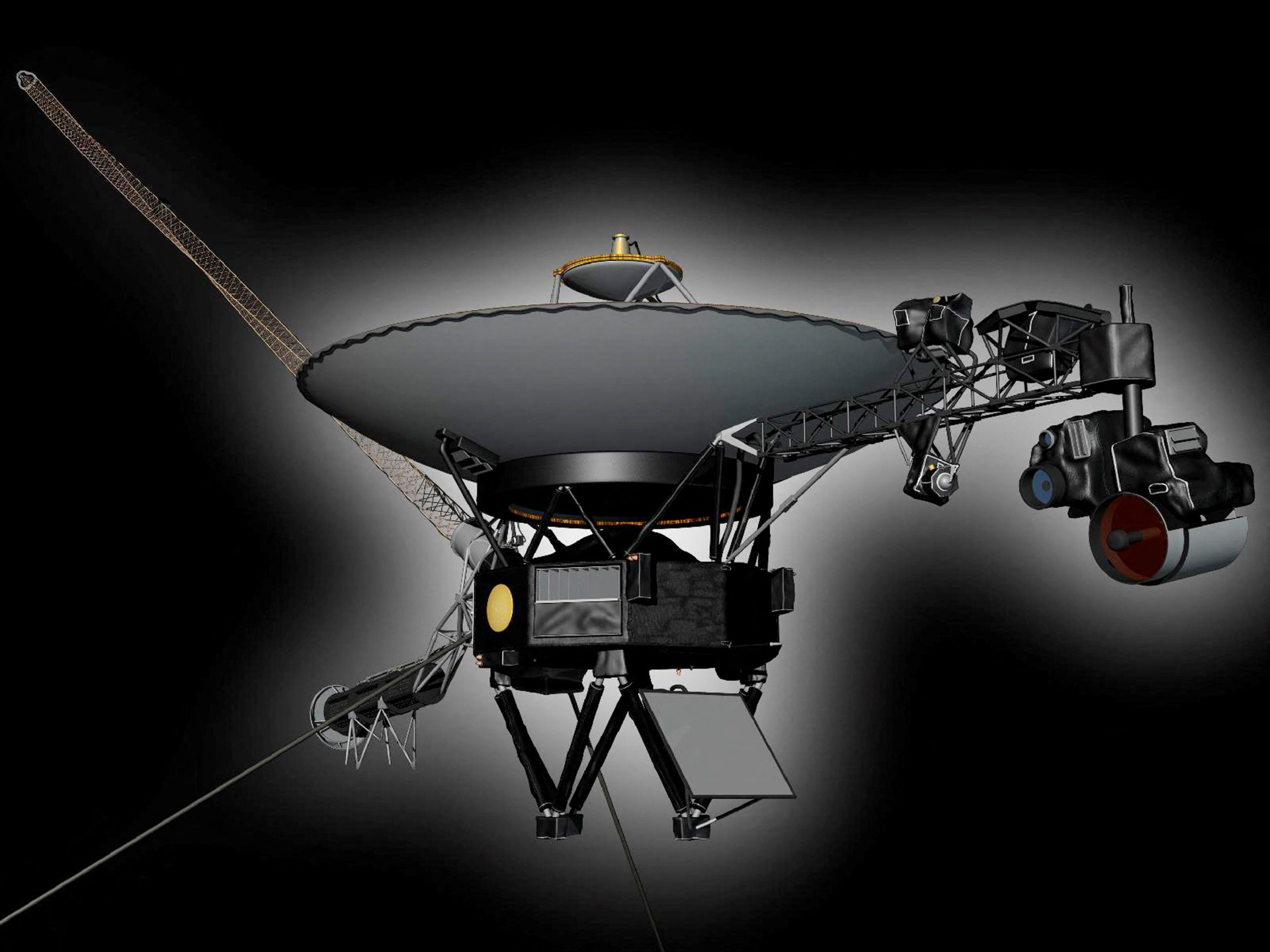

Voyager 1 reaches one light-day from Earth, marking a historic milestone nearly 50 years after its 1977 launch.
NASA’s Voyager 1 probe, the most distant human-made object, has reached a distance of one light-day from Earth nearly 50 years after it was launched.
The spacecraft hit the milestone on Wednesday and is now about 26 billion km away, according to NASA.
Recommended Stories
list of 3 items
- list 1 of 3SpaceX’s Starship captured by launchpad arms in dramatic first
- list 2 of 3Pakistani astronaut to join China’s next space station mission
- list 3 of 3‘Almost magic’ as SpaceX craft caught mid-air: Why it matters
end of list
A light-day is the distance light can travel in 24 hours, which means messages sent from Earth take a day to reach Voyager 1, and another day for teams on the ground to receive a reply.
The feat is “the best illustration of just how vast space is”, said NASA scientist Tiffany Kataria. “So much of what we dream about is travelling to other stellar systems,” she told the AFP news agency. “And it took Voyager 1 nearly 50 years to get to just the edge of our own solar system, let alone to only a light-day.”
Many exoplanetary systems, she noted, are at least several light-years away. NASA expects Voyager 1 to take about 18,000 years to travel a full light-year.
Interstellar space
Launched in 1977, Voyager 1 and its twin Voyager 2 are the only spacecraft to have reached interstellar space, the region beyond the Sun’s heliosphere. Voyager 2 is expected to reach one light-day in 2035.
Some of Voyager 1’s equipment, including its cameras, has been switched off remotely to save power, but the probe continues to study invisible phenomena such as magnetic fields.
The data helps researchers study “the gas, the dust and other material that exists between stars”, Kataria said.
Both craft carry “Golden Records”, 30cm gold-plated copper discs intended to convey the story of our world to extraterrestrials.
Advertisement
Earlier in their journeys, the Voyagers explored the giant planets Jupiter, Saturn, Uranus and Neptune.
Images of Jupiter taken by Voyager 1 first revealed the existence of rings around the planet and helped scientists understand the “really extreme vortices and weather” in its atmosphere, Kataria added.
Related News

US Supreme Court to hear case on race in school admissions
US charges 3 ‘Iranian-backed’ men over alleged plot at UK Fairford air base

Tankers hit in Strait of Hormuz as drone raises alarm at Iraq gas field