Netanyahu says Israel will forge regional alliance to rival ‘radical axes’
 22 February 2026
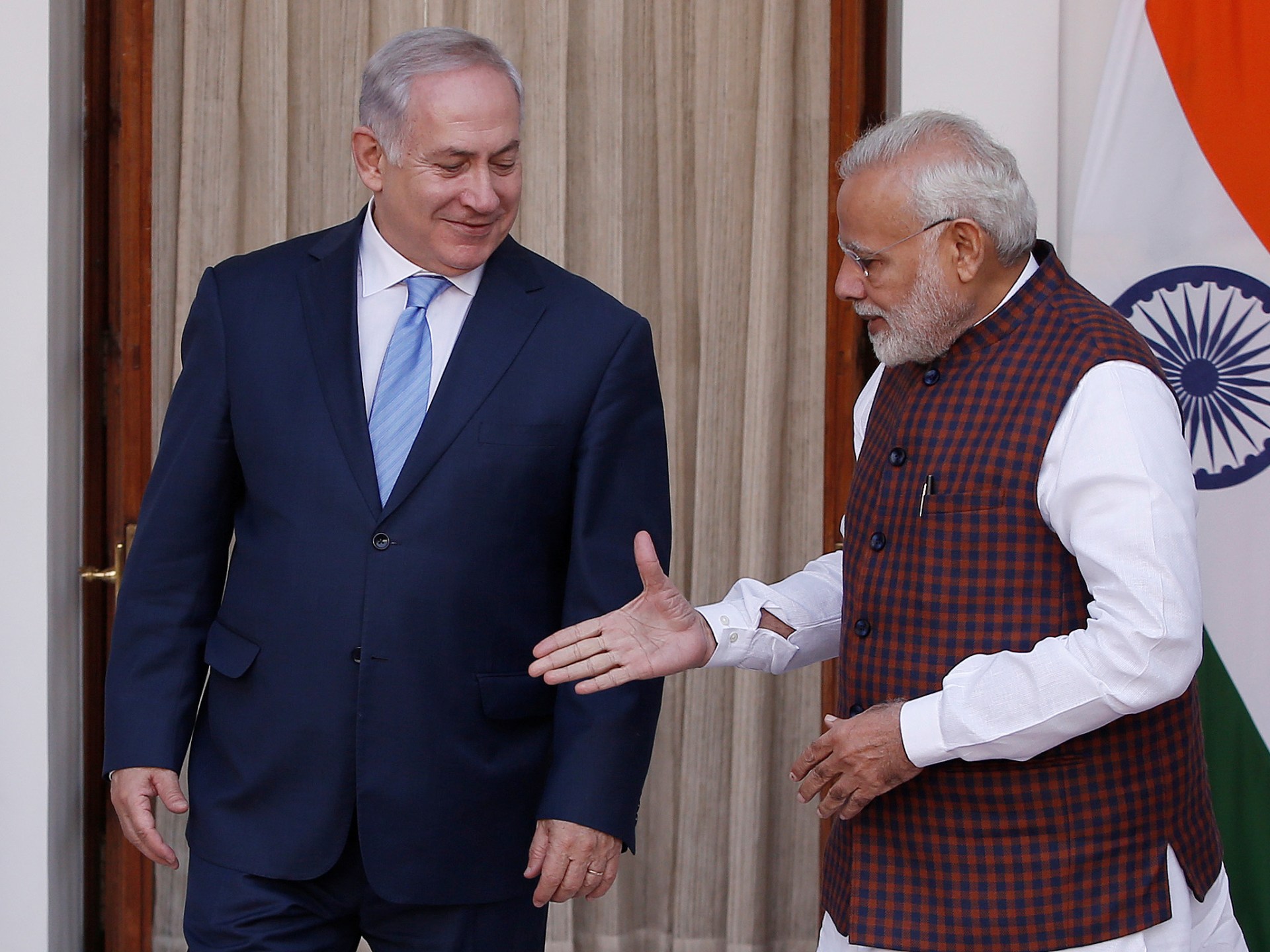

Israeli Prime Minister Benjamin Netanyahu has announced that Israel plans to build a network of allied nations in or around the Middle East to collectively stand against what he called “radical” adversaries.
Netanyahu made the comments on Sunday while announcing the upcoming visit to Israel of Indian Prime Minister Narendra Modi, whose country the Israeli leader said would be part of the “axis of nations that see eye to eye” with Israel.
- list 1 of 3Israeli army kills 2 Palestinians in strikes on Gaza during Ramadan
- list 2 of 3Israel wants to execute Palestinians and the world will allow it
- list 3 of 3‘Absurd and provocative’: Huckabee faces firestorm for Israel border stance
end of list
Netanyahu, who is wanted by the International Criminal Court on war crimes charges, also referred to Greece, Cyprus and other unnamed Arab, African and Asian countries.
“In the vision I see before me, we will create an entire system, essentially a ‘hexagon’ of alliances around or within the Middle East,” Netanyahu said, according to the Times of Israel.
“The intention here is to create an axis of nations that see eye to eye on the reality, challenges, and goals against the radical axes, both the radical Shia axis, which we have struck very hard, and the emerging radical Sunni axis.”
Modi said he fully agrees with Netanyahu on the “bond between India and Israel”, including the “diverse nature of our bilateral relations”.
“India deeply values the enduring friendship with Israel, built on trust, innovation and a shared commitment to peace and progress,” Modi wrote in a post on X.
Since the start of Israel’s genocidal war on Gaza, its assaults have been weakening the Iran-led “axis of resistance”, including Hezbollah in Lebanon. Israel and Iran also directly clashed last June in a 12-day war, in which the US military also joined to attack Iran’s nuclear sites.
Advertisement
Netanyahu did not elaborate on what he meant by “emerging radical Sunni axis”, but he has previously identified the Muslim Brotherhood as its leading element.
Relations between Israel and several predominantly Sunni Muslim states have soured amid the bloodshed in Gaza, including with Turkiye, whose President Recep Tayyip Erdogan has sharply criticised Netanyahu, and Saudi Arabia, which has accused Israel of genocide.
Prospects for normalisation between Israel and Saudi Arabia also appear to be eroding. In recent months, the kingdom has rebuked Israel’s recognition of Somalia’s breakaway region, Somaliland, as well as the Israeli moves towards annexation in the occupied West Bank.
Since 2020, Israel has pushed to establish formal ties with Arab and Muslim states as a way to shore up its regional standing as part of the US-backed so-called “Abraham Accords”.
Under that framework, Israel has been enjoying close relations with the United Arab Emirates, Bahrain and Morocco.
Related News

Bulgaria’s president picks senior central bank official as acting PM
US Energy Secretary Chris Wright touts oil production on Venezuela visit
Marco Rubio wants to build a ‘new Western century’. Will Europe join?