Russia to pause bombing Kyiv during extreme winter conditions, says Trump
 30 January 2026
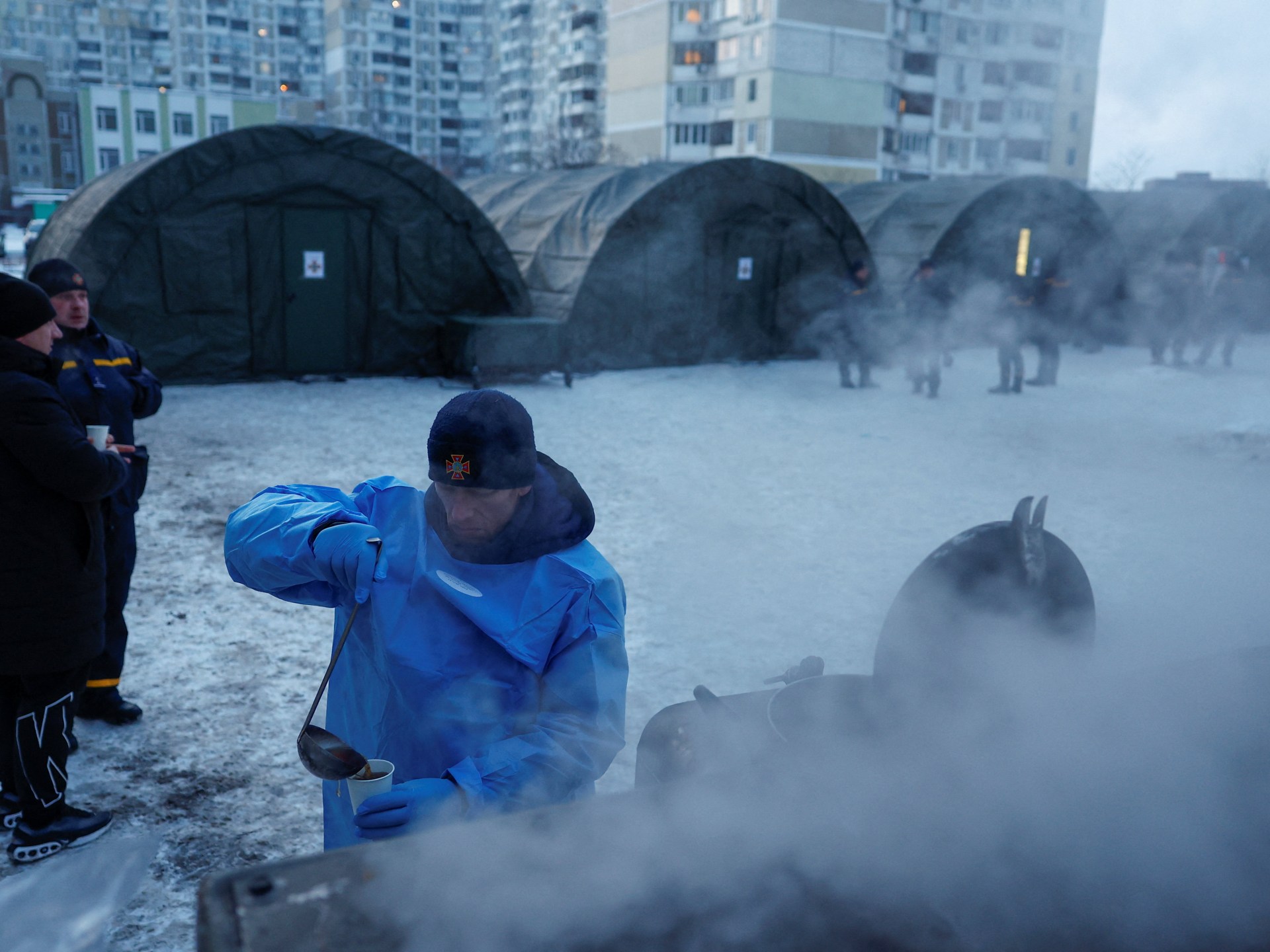

Ukrainian President Volodymyr Zelenskyy has welcomed United States President Donald Trump’s announcement that Russia will not attack Kyiv and “various” Ukrainian towns for seven days as civilians struggle with a lack of heating amid freezing winter temperatures.
In a post on social media on Thursday, Zelenskyy said that Trump’s comments earlier in the day were an “important statement” about “the possibility of providing security for Kyiv and other Ukrainian cities during this extreme winter period”.
- list 1 of 4Rybakina to play Sabalenka in rematch of 2023 Australian Open final
- list 2 of 4Why is the UK’s Keir Starmer in China and what does he want to achieve?
- list 3 of 4Ukraine receives bodies of 1,000 soldiers from Russia
- list 4 of 4Russia-Ukraine war: List of key events, day 1,436
end of list
Zelenskyy said that the pause in bombing had been discussed by negotiators during recent ceasefire talks in the United Arab Emirates, and that they “expect the agreements to be implemented”.
“De-escalation steps contribute to real progress toward ending the war,” the Ukrainian leader added.
Trump said earlier on Thursday that Russian President Vladimir Putin had agreed to his request not to fire on Ukraine’s capital Kyiv for a week due to severely low temperatures.
“I personally asked President Putin not to fire into Kyiv and various towns for a week, and he agreed to do that,” Trump said at a cabinet meeting, citing the “extraordinary cold” in the region.
The announcements came as Kyiv Mayor Vitali Klitschko said on the Telegram messaging app on Thursday that 454 residential buildings remain without heating in the city, as the Ukrainian capital struggles to restore power to homes following repeated Russian bombings targeting power and heating infrastructure in recent weeks.
Temperatures are forecast to drop to -23 degrees Celsius (-9.4 degrees Fahrenheit) overnight in the Ukrainian capital this week.
Russia’s capital Moscow has experienced its heaviest snowfall in 200 years during the month of January, the meteorological observatory of Lomonosov Moscow State University said on Thursday, according to Russia’s state TASS news agency.
Advertisement
Russia and Ukraine also exchanged the bodies of soldiers killed in the war on Thursday, officials from both countries confirmed.
Similar exchanges have been agreed to during previous rounds of ceasefire talks. However, a breakthrough on ending Russia’s nearly four-year war on Ukraine has remained elusive.
Russian Foreign Minister Sergey Lavrov continued to pour cold water on ceasefire prospects on Thursday, saying that Moscow had yet to see a 20-point ceasefire plan that he said had been “reworked” by Ukraine and its allies.
Russia’s top diplomat also claimed that Ukraine had used brief pauses in fighting to “push” people to the front lines, according to TASS.
Related News
Cuban official accuses US of ‘piracy’ against sanctioned Caribbean island
Hunt on for dozens of ISIL prisoners as Syrian army moves to take Hasakah

Mother of Elon Musk’s child sues his AI company over Grok deepfake images