
Saint-Martin charts new economic path with Social Economy Strategy – StMaartenNews.com – News Views Reviews
 04 April 2026

Advertisement
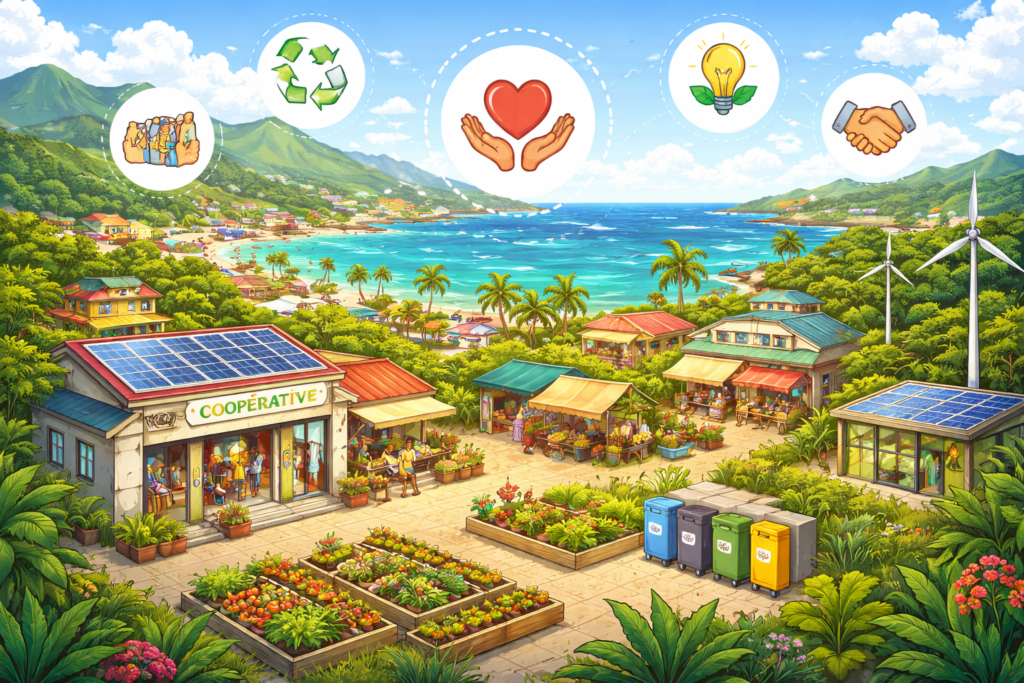
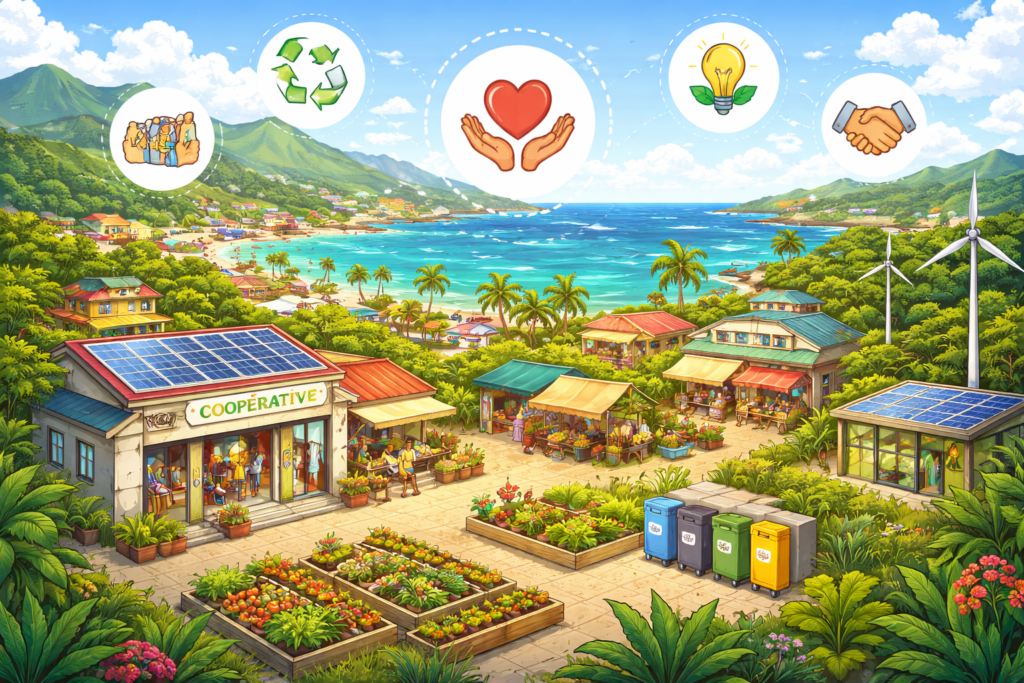
MARIGOT–One of the standout decisions taken during the Territorial Council meeting of March 26, 2026, was the adoption of an ambitious strategy to develop the Social and Solidarity Economy (ESS) in Saint-Martin over the next three years, signaling a shift toward a more inclusive and diversified economic model.
During a session that examined 13 deliberations ranging from infrastructure financing to public-private settlements, elected officials placed particular emphasis on strengthening the island’s economic resilience through social innovation and community-based enterprise. The ESS strategy, covering the period 2026–2028, was widely viewed as a cornerstone decision with long-term implications for the territory’s development.
The Social and Solidarity Economy encompasses a wide range of organizations—including cooperatives, associations, and socially driven enterprises—that prioritize collective benefit, sustainability, and social impact over profit maximization. By formally adopting a territorial strategy, the Collectivité aims to give this sector a stronger institutional framework and a clearer development trajectory.
At the heart of the plan is the objective to build a structured and sustainable ecosystem for ESS actors in Saint-Martin. This includes supporting the creation and growth of local enterprises that address social needs, whether in employment, environmental protection, education, or community services. Officials emphasized that the approach is not only economic but also social, aiming to tackle inequalities while fostering innovation.
The strategy also seeks to professionalize and strengthen existing organizations by improving access to training, funding opportunities, and technical support. By doing so, the Collectivité hopes to enhance the capacity of local actors to deliver impactful projects while ensuring their long-term viability in a competitive economic environment.
A key institutional development outlined in the plan is the establishment of a Territorial Chamber of the Social and Solidarity Economy (CTESS) by mid-2027. This body is expected to serve as a central coordinating platform for ESS stakeholders, providing representation, strategic guidance, and support services. It will also help align local initiatives with national legislation governing the sector, particularly the framework established under French law.
Beyond local development, the strategy has a clear outward-looking dimension. Saint-Martin aims to position itself as a regional hub for the social economy in the Caribbean, leveraging its geographic and cultural connections. This ambition is closely tied to preparations for the Global Social and Solidarity Economy Forum (GSEF), scheduled to take place in Rio de Janeiro in October 2027.
By strengthening its ESS ecosystem ahead of this international forum, the territory hopes to increase its visibility, attract partnerships, and participate more actively in global discussions on sustainable and inclusive economic models.
###
ADVERTISEMENT
Related News

Procès du tableau de Macron décapité : Emmanuel Macron ne se constitue plus partie civile

Suivez en direct l'investiture de Francs Baptiste à Sainte-Anne

Au Liban, un demi-million d'élèves privés d'école à cause de la guerre et des déplac...
