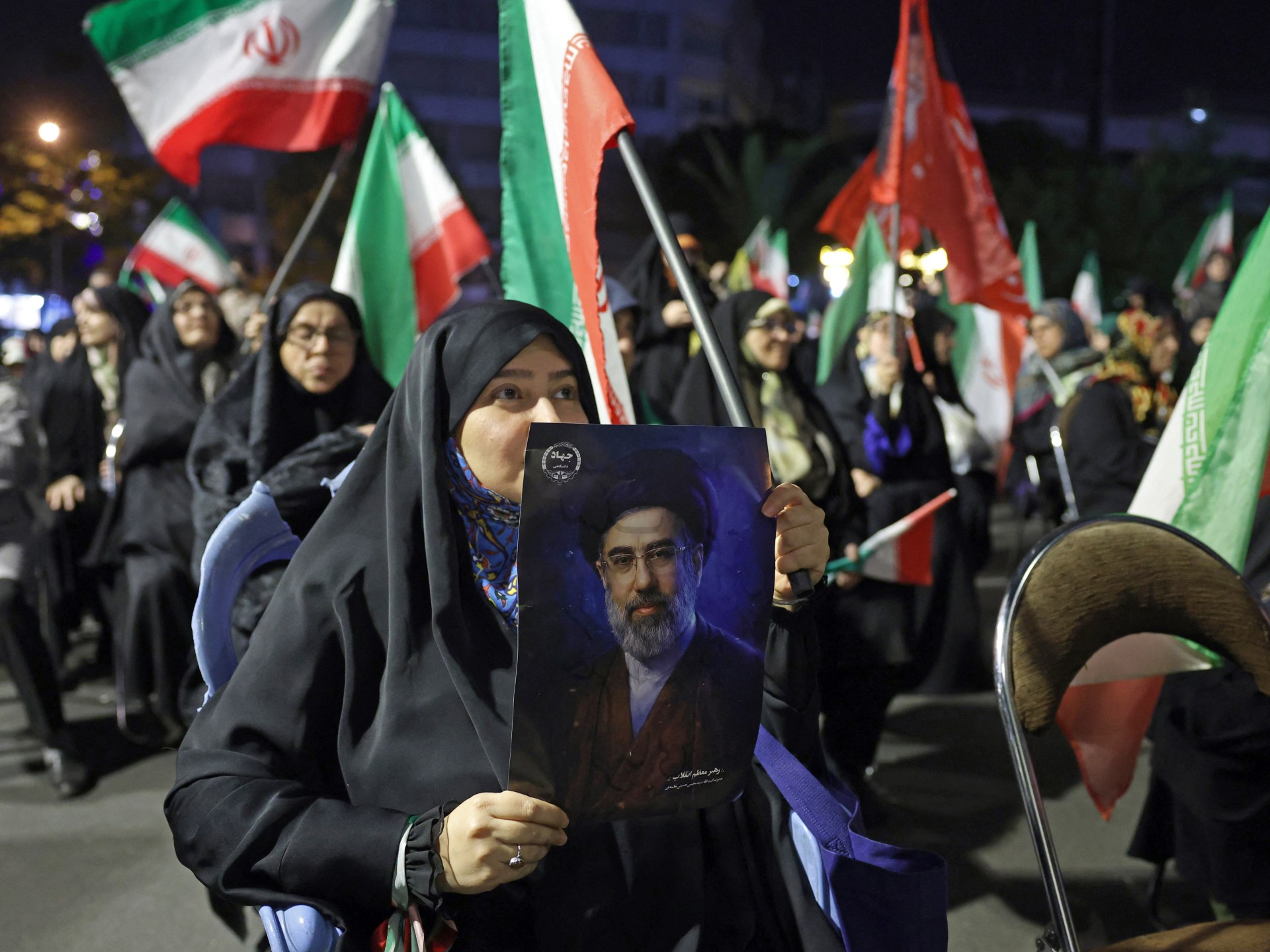

President Donald Trump sought to change several terms of a proposal to end the US-Israel war on Iran, according to media reports in the United States, as a finalised deal remains elusive.
The New York Times reported on Saturday that Trump’s changes involved toughening the deal terms, and the US has sent the new framework back to be considered by Iran, according to officials familiar with the proceedings.
- list 1 of 3How realistic is Trump’s Iran framework?
- list 2 of 3Iran denies ceasefire deal with US is “finalised”
- list 3 of 3What Hegseth’s comments at Shangri-La Dialogue say about US foreign policy
end of list
The report said it was not immediately clear what the changes entailed. However, Axios reported Trump wanted to reinforce multiple points of the deal that he felt were important, such as what to do with Iran’s nuclear material.
A senior US official told Axios that Trump was informed it could take three days for Iran to respond.
“They’re literally in caves, and they’re not using email,” the official told Axios.
“There will be a deal. The imminence of it, we’ll see. We’re willing to wait so the president gets what he asks for. It could be a week. It could be less. It could be more. At the turn of the week, we hope to have something,” the official added.
The new tweaks could prolong negotiations between the parties for days before a decision is reached on whether the deal would end the war, which began after the US and Israel attacked Iran on February 28.
US sources told the AFP news agency that the proposal had been waiting on Trump’s sign-off, but he made no decision after a White House Situation Room meeting on Friday.
Trump has said his priorities for any deal included Iran agreeing to never develop nuclear weapons and the reopening of the blockaded Strait of Hormuz, through which roughly 20 percent of the world’s oil supply transits.
Advertisement
On Saturday, the Iranian military’s Khatam al-Anbiya Central Headquarters reasserted the country’s control over the strait, warning that foreign commercial and military vessels would be targeted if they did not comply with regulations governing passage through the strategic waterway.
Tehran has also said repeatedly that it does not intend to build nuclear weapons. In March 2025, Tulsi Gabbard, the former US director of national intelligence, testified to Congress that Washington “continues to assess that Iran is not building a nuclear weapon”.
Related News

Aid cuts and climate change drive deadly malaria surge in Zimbabwe
Why is Trump deploying 5,000 troops to Poland?
Five killed in Lebanon as Israeli forces advance across key Litani River