
The United States has imposed a host of new sanctions related to Cuba, amid a months-long pressure campaign against the island nation.
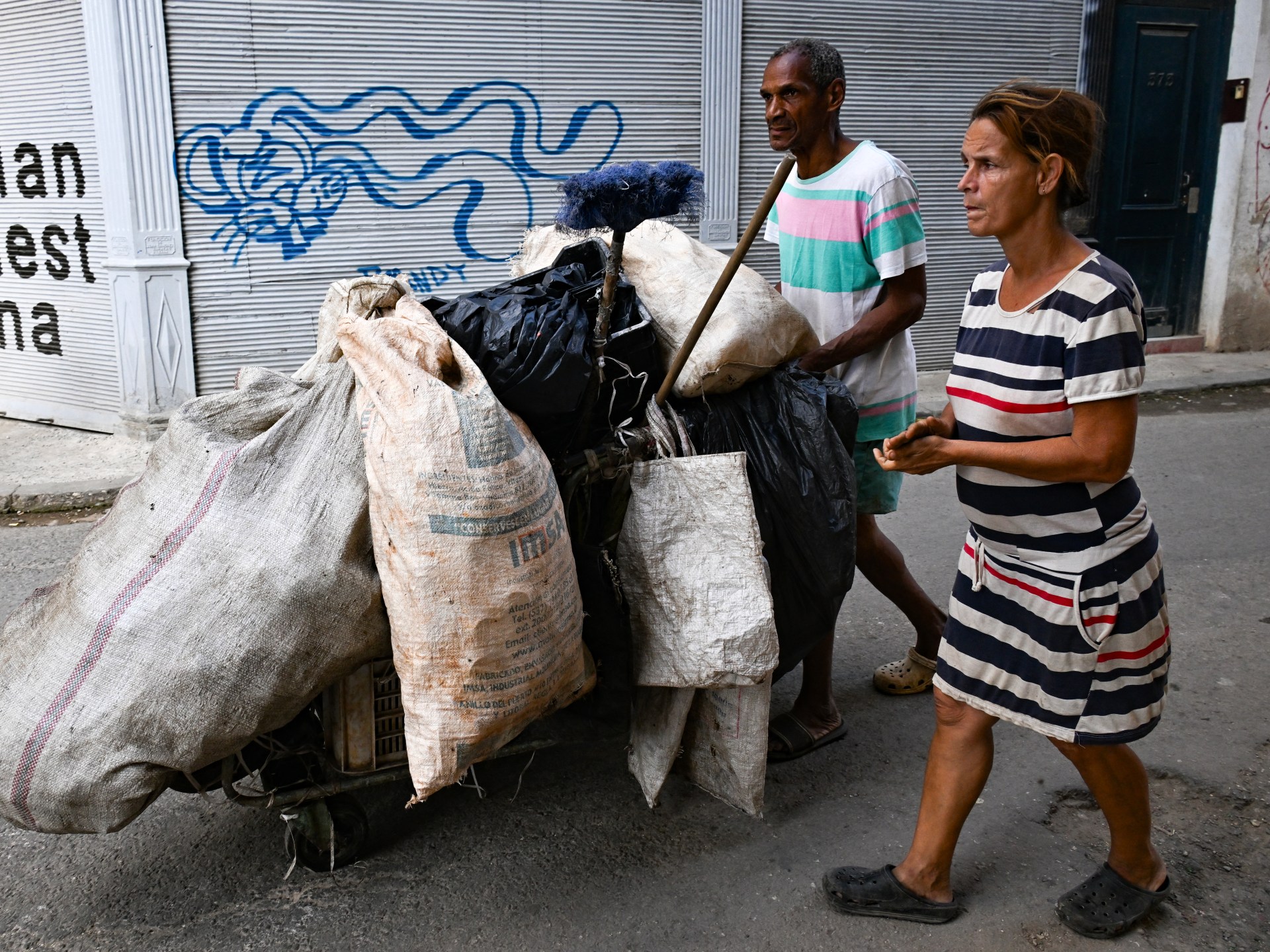
The sanctions on Thursday were announced hours after United Nations experts decried Washington’s effective fuel blockade of the island as tantamount to “energy starvation”.
- list 1 of 3Cuban president defiant amid US pressure and energy blockade threats
- list 2 of 3Cuba confirms talks with US officials, wants end to Trump’s energy blockade
- list 3 of 3Petro becomes first president to visit Venezuela since Maduro abduction
end of list
The measures target Grupo de Administracion Empresarial SA (GAESA), a conglomerate controlled by the country’s military with ties to nearly all segments of its economy.
They also targeted Ania Guillermina Lastres Morera, the executive president of GAESA and Moa Nickel SA (MNSA), a joint venture between Toronto-based Sherritt International Corp and Cuba’s state-owned nickel company.
Sherritt said in a statement on its website on Thursday that it had suspended its direct participation in joint venture activities in Cuba following the sanctions.
In a statement posted on X, US Secretary of State Marco Rubio said the sanctions “demonstrate that the Trump Administration will not stand by while Cuba’s communist regime threatens our national security in our hemisphere”.
“We will continue to take action until the regime takes all necessary political and economic reforms,” he said.
Cuba’s government did not immediately reply to the latest round of sanctions, but condemned an earlier round announced this week as “unilateral coercive measures” and “collective punishment on the Cuban people”.
The Trump administration has heaped increasing pressure on Cuba’s communist government following the January 3 abduction of Venezuelan leader Nicolas Maduro.
Advertisement
Washington has since staunched Venezuelan oil deliveries to Cuba, long considered a lifeline. Trump also issued an executive order creating a path to sanction any country that delivers fuel to the island, effectively imposing a blockade.
Trump has also repeatedly threatened military action to topple the country’s government.
On Thursday, three UN special rapporteurs condemned what they called the “unlawful blockade”, which they said “is not only disrupting daily life but also undermining the enjoyment of a wide range of human rights”.
They defined “energy starvation” as “a condition in which the lack of fuel cripples the functioning of essential services required for a dignified life”.
All told, only one Russian oil tanker has reached Cuba in recent months, compounding an energy crisis already driven by economic stagnation.
The experts pointed to reports that fuel scarcity was preventing people from reaching hospitals and children from attending school, adding that the country’s health system is reportedly facing a backlog of more than 96,000 surgeries, including 11,000 for children.
“Energy starvation as a coercive tool is incompatible with international human rights norms,” they said.
Related News
Iran shifts economic focus to essentials during war uncertainty
Tennessee approves new congressional map in latest redistricting flurry
Bulk carrier attacked by multiple small craft off Iran, UKMTO says