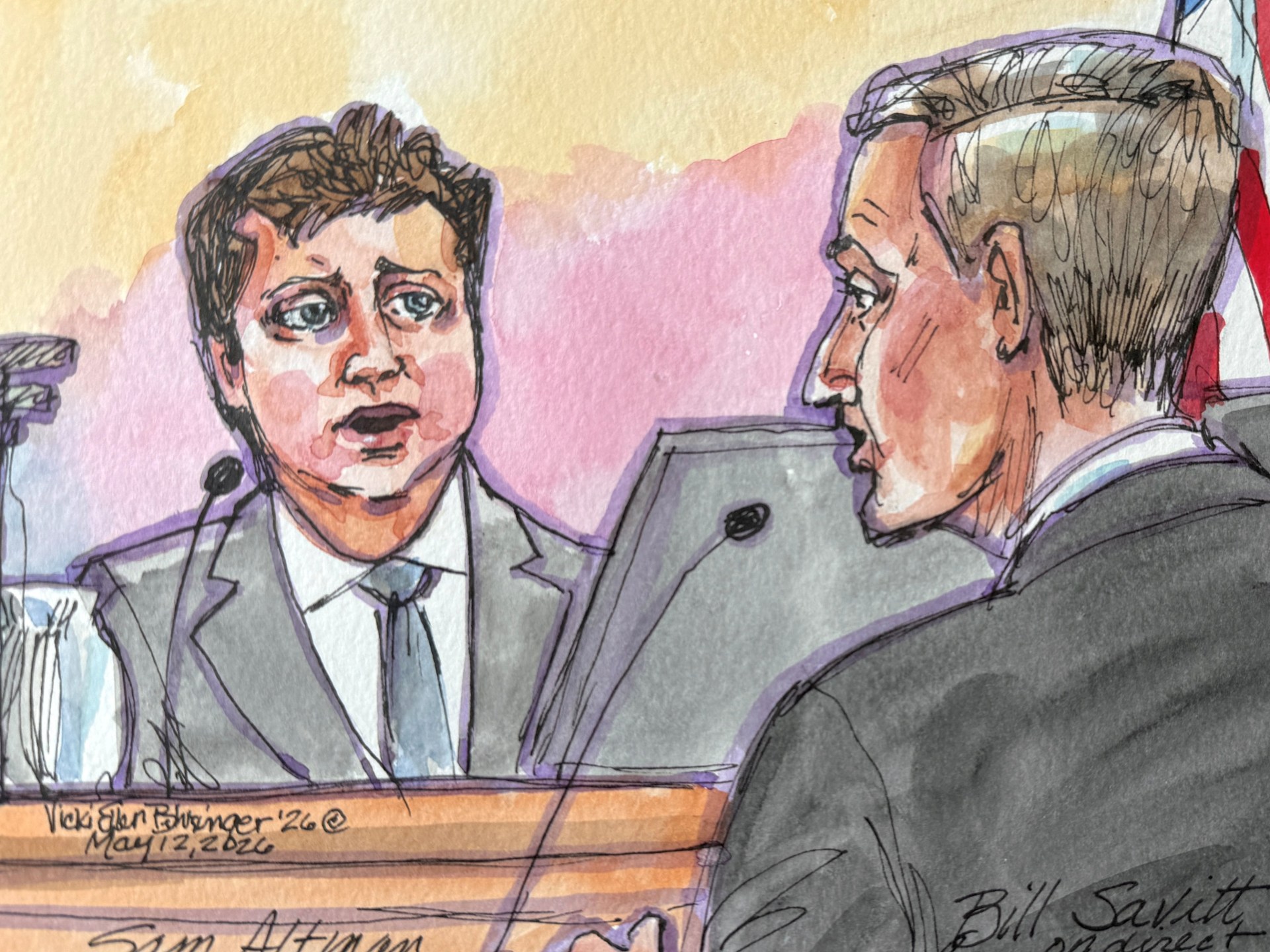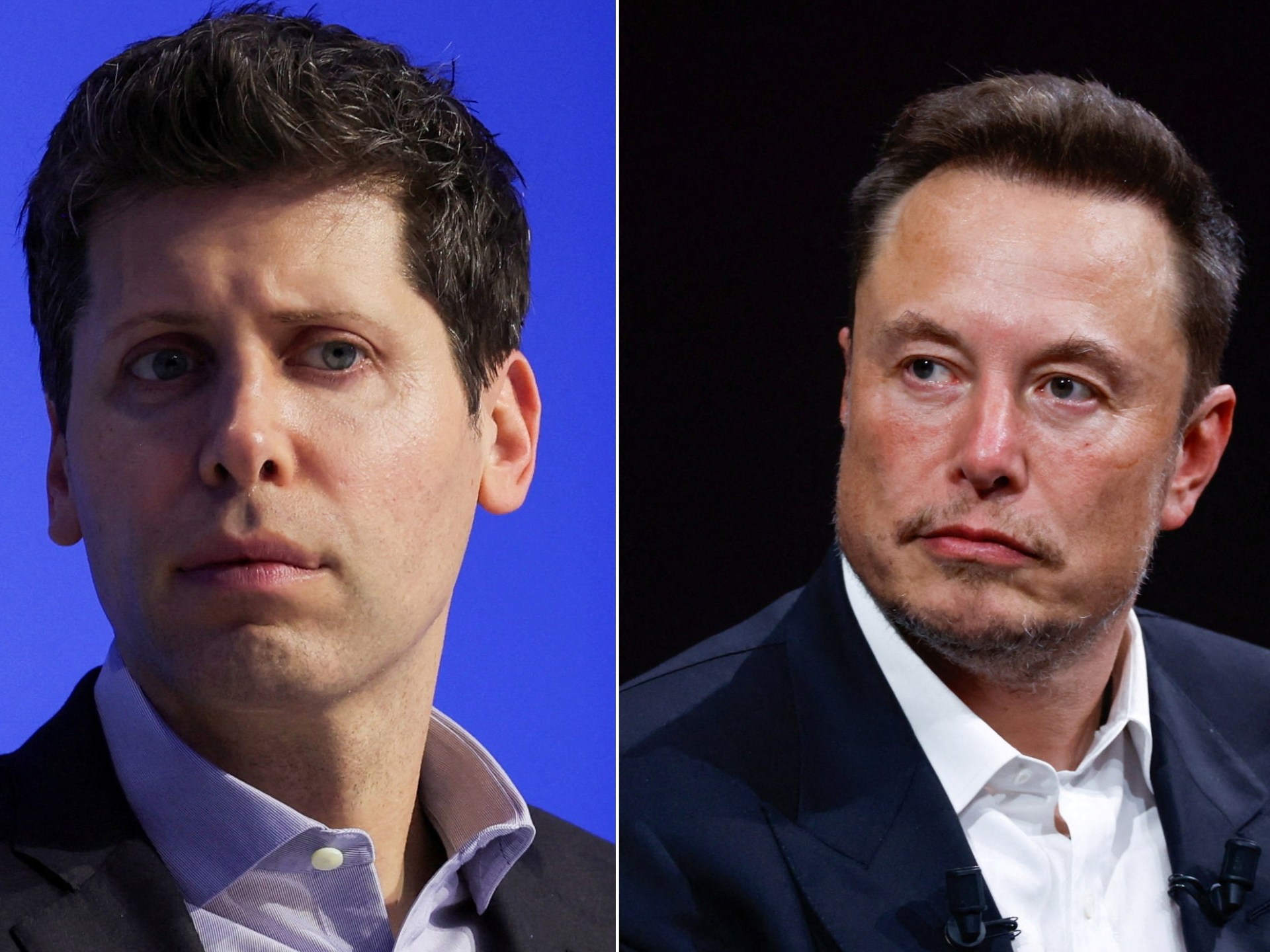

On Monday morning, a jury in Oakland, California, announced its verdict in one of the most-watched tech feuds between billionaire Elon Musk and OpenAI CEO Sam Altman. The nine-member jury handed a decisive victory to Altman, saying Musk had waited too long to bring his claims against the artificial intelligence company and its top executives.
Musk, who cofounded OpenAI as a nonprofit, had filed a $150bn lawsuit against the organisation, Altman and its president, Greg Brockman, accusing them of turning it into a for-profit entity for personal enrichment.
- list 1 of 4Lebanon and Syria reshape ties amid Israeli attacks and regional shifts
- list 2 of 4Gunmen abduct 39 students, 7 teachers in attacks on Nigeria schools
- list 3 of 4San Diego mosque shooting: What we know about the victims and the attackers
- list 4 of 4‘King of the North’: Who is Andy Burnham, a potential UK prime minister?
end of list
The verdict, however, stopped short of resolving the central question at the heart of the case, whether OpenAI betrayed the nonprofit mission on which it was founded in 2015 as it transformed from a research lab focused on benefitting humanity into one of the world’s most powerful AI companies.
Instead, the case became focused on a procedural issue. After deliberating for less than two hours, the jury unanimously found that the statute of limitations had expired before Musk filed the lawsuit in 2024, meaning jurors concluded he had waited too long to bring his claims under the applicable legal deadline. US District Judge Yvonne Gonzalez Rogers accepted the finding and dismissed the case.
The ruling removes a major legal threat for OpenAI at a pivotal moment for the company, which is deepening its commercial partnerships, expanding its relationship with Microsoft and moving towards what could become one of the largest public offerings in Silicon Valley history; while for Musk, the ruling leaves room to argue that the case was lost on timing rather than substance.
Advertisement
Shortly after the verdict, Musk repeated his accusations on X. “Altman & Brockman did in fact enrich themselves by stealing a charity. The only question is WHEN they did it!” Musk wrote on X. “Creating a precedent to loot charities is incredibly destructive to charitable giving in America.”
Musk has decided to appeal, ensuring that the increasingly bitter feud between two of Silicon Valley’s most powerful figures is unlikely to end any time soon.
How did Musk and Altman fall out?
Musk and Altman cofounded OpenAI in 2015 alongside Brockman and other researchers at a time when concerns were growing over how AI could reshape society.
The idea, according to testimony and internal discussions presented during the trial, was that the company could focus on building safe AI systems that benefitted humanity rather than prioritising shareholder returns.
Musk and Altman also believed the nonprofit structure would help OpenAI compete with technology giants such as Google by attracting top researchers and positioning the organisation as a mission-driven alternative.
Musk claims he contributed roughly $38m to OpenAI during its early years, but relations between the founders later deteriorated sharply. He resigned from OpenAI’s board in February 2018, officially citing potential conflicts of interest as Tesla became more focused on AI.
But the split deepened after OpenAI created a for-profit subsidiary and Microsoft invested heavily in the company. Microsoft has since committed tens of billions of dollars to its partnership with OpenAI, helping transform ChatGPT into one of the defining products of the global AI boom.
Musk became increasingly critical of the company, arguing that OpenAI had moved far beyond the nonprofit vision on which it was founded. In 2023, he launched a rival AI company, xAI, the maker of the Grok chatbot, before filing his lawsuit against OpenAI the following year.
Why did the case collapse?
At the centre of the trial was a relatively technical legal question about when Musk became aware that OpenAI was moving towards a profit-driven structure.
Because the lawsuit was filed in 2024, Musk needed to convince jurors that the alleged wrongdoing occurred within the legal time limit for bringing his claims.
Musk argued that his concerns fully crystallised only in 2023, particularly after Microsoft’s big investments into OpenAI’s for-profit arm.
But OpenAI’s lawyers argued that Musk had known for years that the company planned to pursue a commercial structure and raise huge amounts of outside funding.
Advertisement
Evidence presented during the trial showed that discussions about creating a for-profit arm dated back to at least 2017. Jurors also heard testimony that Altman had sent Musk documents in 2018 outlining plans for OpenAI to raise billions of dollars through a for-profit structure.
Ultimately, the jury sided with OpenAI’s argument that Musk could have filed his lawsuit much earlier – and therefore waited too long.
That meant jurors never had to answer the more explosive question at the centre of the case about whether OpenAI had actually betrayed its founding mission.
What did OpenAI argue?
OpenAI maintained throughout the trial that there was never an agreement to remain a nonprofit indefinitely. Its lawyers argued that Musk understood from the beginning that developing cutting-edge artificial intelligence would require extraordinary levels of funding and computing power.
OpenAI also portrayed Musk’s lawsuit as partly motivated by rivalry. By the time the case reached court, Musk’s xAI had emerged as a direct competitor to OpenAI in the race to develop advanced AI systems.
Meanwhile, OpenAI had become one of the most powerful companies in the technology industry, reportedly valued at more than $800bn and moving towards what could eventually become one of the largest public offerings in history.
Lawyers for OpenAI argued that Musk became hostile only after losing influence within the company and watching Altman turn OpenAI into the dominant force in generative AI.
What questions did the trial leave unanswered?
Although the verdict was a clear legal victory for OpenAI, the trial never became the sweeping test case about the future of artificial intelligence that many had expected.
Because the case was resolved on procedural grounds, the court did not answer some of the biggest questions raised by the AI boom: how these systems should be governed, who should benefit economically from them, and whether companies developing increasingly powerful AI tools can still claim to act in the public interest while pursuing enormous commercial growth.
The trial also touched only briefly on broader concerns surrounding AI development, including transparency, labour and the extraction of data used to train AI systems.
Nicole Turner Lee, director of the Centre for Technology Innovation, told Al Jazeera that one of the central problems surrounding AI is that the technology is deeply “extractive”.
“It does undergo theft where people do not consent as to whether or not their information, their image, their voice, their text are actually being extracted,” she said, raising concerns about compensation and consent in AI training systems.
Those issues remained largely outside the scope of the trial due to it ultimately centring on procedural issues.
The ruling, therefore, also removed the possibility of a far more disruptive outcome that could have threatened OpenAI’s corporate structure, its partnership with Microsoft and the wider wave of investment pouring into the AI industry.
Advertisement
But the broader debate over AI’s future is far from settled. With Musk preparing an appeal, the courtroom battle between the two former allies looks set to continue alongside wider questions about how AI should be governed.