Rubio, Saudi Arabia’s foreign minister hold talks on Yemen, Hormuz Strait
 29 September 2026
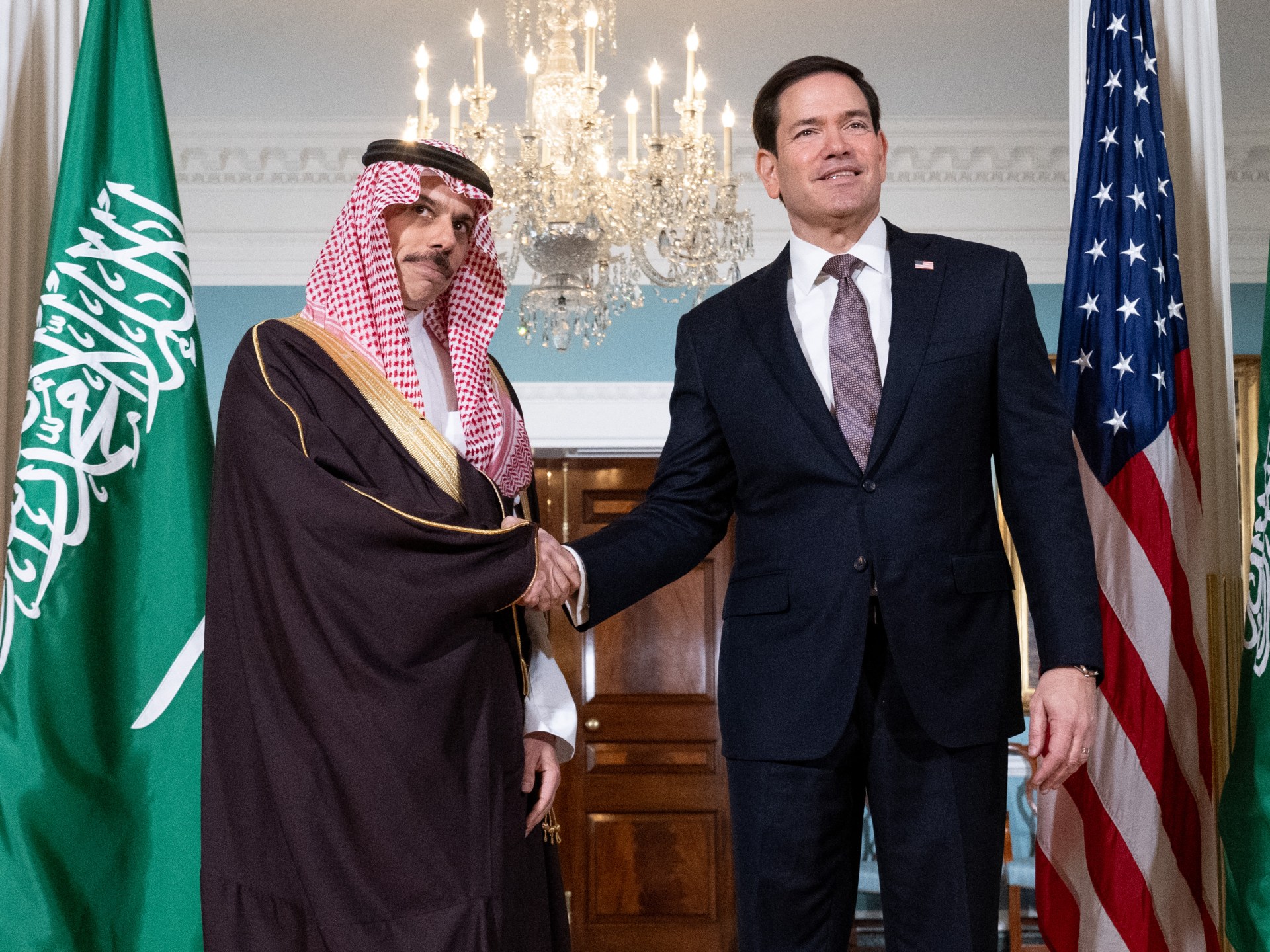

United States Secretary of State Marco Rubio has held talks with his Saudi Arabian counterpart, Prince Faisal bin Farhan Al Saud, on cooperation in regional security, including shipping safety in the Strait of Hormuz and escalating hostilities in Yemen.
The talks in Washington, DC, on Monday came as the US-Israel war on Iran enters its eighth month, with diplomacy at a stalemate as mediators continue to pass messages between the parties.
- list 1 of 3Iran touts Hormuz attacks as oil flows increase despite tensions
- list 2 of 3Yemen’s health system could collapse in some areas, minister warns
- list 3 of 3‘Better deal’: What’s behind Trump’s rejection of Iran’s truce offer?
end of list
The conflict has spilled into Yemen, where the Houthis, who are backed by Iran, have launched an offensive along the Red Sea coast and struck Saudi Arabia, including airports and oil infrastructure.
In a post on X, Rubio said he and Prince Faisal discussed “our bilateral cooperation in regional security and stability, including in Iran, Gaza, Sudan, and Yemen”.
The Saudi SPA state news agency reported that the two diplomats held talks on “the security and political developments in the region, the situation in Yemen, as well as the efforts being made to address it”. The two men also addressed protecting “the security of navigation and freedom of passage” through the Strait of Hormuz, as well as the Bab al-Mandeb strait off the coast of Yemen, which the news agency said contributes to regional stability and the continued flow of trade.
The ministers stressed continued diplomatic coordination on regional crises, the agency said.
The meeting followed US media reports that Saudi Crown Prince Mohammed bin Salman had sought US military help against the Houthis in Yemen. Washington declined to carry out strikes but agreed to provide intelligence and targeting support, the Reuters news agency reported, citing sources.
Advertisement
Rubio also held separate talks with Lebanese Prime Minister Nawaf Salam, who urged Washington to help put into effect a US-brokered ceasefire agreement between Lebanon and Israel.
Lebanon was pulled into the US-Israel war on Iran after the Lebanese armed group Hezbollah launched attacks on northern Israel, citing the assassination of Iranian Supreme Leader Ali Khamenei on the first day of the conflict as well as near-daily Israeli attacks on Lebanese territory.
Israel now occupies some 6 percent of Lebanon. The US-brokered agreement signed in June envisages a phased Israeli withdrawal from southern areas, as the Lebanese army deploys and moves to disarm Hezbollah.
Implementation has stalled after initial deployments, with Hezbollah refusing to surrender its weapons and insisting on an Israeli withdrawal first.
In a statement after the meeting with Rubio, Salam called for “practical steps and tangible results on the ground” that would lead to a full Israeli withdrawal and bring all weapons under state control.
He said both sides needed “a clear timetable” and “a credible verification mechanism” to monitor progress. Such a mechanism, he said, would keep a failure to carry out one part of the agreement from becoming an excuse to halt the entire process.
The prime minister also called for US and international support for relief, reconstruction and the return of displaced people, as well as continued assistance for the Lebanese army.
Related News
Tens of thousands march across Germany to protest far-right party AfD
Iran flights to Baghdad, Muscat cancelled ahead of US aviation sanctions

Could AI firms be held responsible for mass shootings?