Sorrow, Not Sorry: King Charles Praises Britain’s Role In Ending Slavery As Caribbean Leaders Push For Reparations
 03 November 2026


By NEWS AMERICAS STAFF WRITER
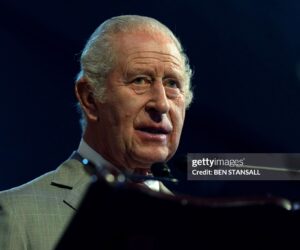
News Americas, ST. JOHN’S, Antigua, Tues. Nov. 3, 2026: Britain’s King Charles told Commonwealth leaders in Antigua today that the transatlantic slave trade “fills my heart with horror and my soul with the most profound personal sorrow.” But in the same speech, he credited Britain’s Royal Navy with helping to end it, and stopped short of an apology.
Addressing the opening ceremony of the 28th Commonwealth Heads of Government Meeting (CHOGM), Charles called slavery a “shameful chapter” of history that “still casts a shadow over these islands and other members of our Commonwealth.”
“And yet history also teaches us that evil need not have the last word; that character and courage can combine to overcome the most monstrous injustice, as they did with the determination to end international trade in enslaved people, in which the Royal Navy played such a leading role,” he said.

Missing from the King’s address was his own family’s role. Britain’s royal family has a long association with the transportation and sale of enslaved people for profit:
- Elizabeth I backed the lucrative dealings of John Hawkins, one of Britain’s first slave traders.
- Charles II encouraged the expansion of the trade.
- As abolitionists campaigned against the trade, they were opposed by the Duke of Clarence, George III’s son, who later became William IV.
“The king did not go nearly far enough,” said Professor Brooke N. Newman, a professor of history at Virginia Commonwealth University’s College of Humanities and Sciences and author of The Crown’s Silence.

“He did not acknowledge or apologize for the monarchy’s institutional culpability in slavery. Additionally, he noted that the Royal Navy played ‘a leading role’ in ending the slave trade while omitting the Royal Navy’s instrumental role in sustaining and defending the transatlantic slave trade for centuries,” Newman said. “It is time for Charles to move beyond his own personal feelings and issue a formal apology for the monarchy’s historical involvement in the trafficking and enslavement of millions of Africans. This, in my view, should be separate from any apology the British government may issue on behalf of the state.”
Charles also told the gathering: “None of us, of course, would be here today were it not for our history, which has shaped us in myriad ways. History is not ours to choose or to change. It is bequeathed to us in complex synthesis by forebears we can never know. Our inheritance includes both their achievements and their failures – the good they did as well as the wrongs.”
He said that the more he has learned, “the more committed I have become to finding ways for us to work in modern partnership to address the wrongs of the past with action for the future,” pointing to education, jobs, intra-Commonwealth trade and climate resilience.
The King spoke against the backdrop of a significant shift in London. British Prime Minister Andy Burnham has expressed sorrow and regret over slavery and, in an article in The Guardian, said he is “open” to the United Kingdom formally apologizing, a change in long-established government policy. He has offered talks on an apology, but not on financial reparations.
St. Lucia’s Prime Minister Philip J. Pierre, chairman of the 15-member Caribbean Community (CARICOM), has reportedly said the bloc is “ready to engage” in the structured dialogue Burnham offered. Antigua and Barbuda Prime Minister Gaston Browne, who takes over as Commonwealth chair for the next two years, said fairness requires “honest engagement with our shared history.”
“We must now carry that commitment forward through structured, inclusive dialogue on the enduring consequences of slavery and colonialism, with a determination to make progress and a willingness to build consensus,” Browne said.
Professor Sir Hilary Beckles, chairman of the CARICOM Reparations Commission and Vice-Chancellor of the University of the West Indies, called the visit by the King and prime minister “a very critical moment in the development of the reparations movement.”
“We know that chattel slavery was invented by the British, this was their concept. The world had never seen any kind of slavery like this. The British enslavers in the Caribbean, beginning in Barbados, created this concept of chattel like cattle,” Beckles said. He noted the visit comes eight months after, in his words, the United Nations determined that chattel slavery was the gravest crime against humanity.
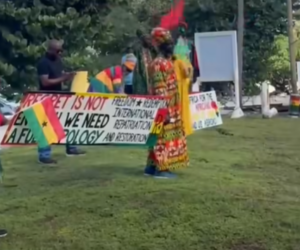
The area around the opening ceremony was locked down, with roads closed. At the perimeter, a small group of protesters held placards reading “You say you regret so apologise” and “Apologise for the greatest crime against humanity and let’s have reparatory justice.”
For Caribbean nations, the King’s sorrow and the prime minister’s openness to an apology mark progress. But with financial reparations still off the table, the real negotiation is only beginning.
Related News
Government Of Antigua and Barbuda Receives 20 Zeekr 7X Vehicles For CHOGM 2026

Puerto Rico Communities Bear The Brunt Of The Water Crisis
King Charles Arrives In The Bahamas As Reparations Protesters Demand Apology